
Where seniors are the most and least impacted by rising housing costs



-Record 12.5 Million Senior Households Spend 30% or More of Income on Housing-
-Seniors in California are the Hardest Hit, West Virginia is the Least Cost-Burdened-
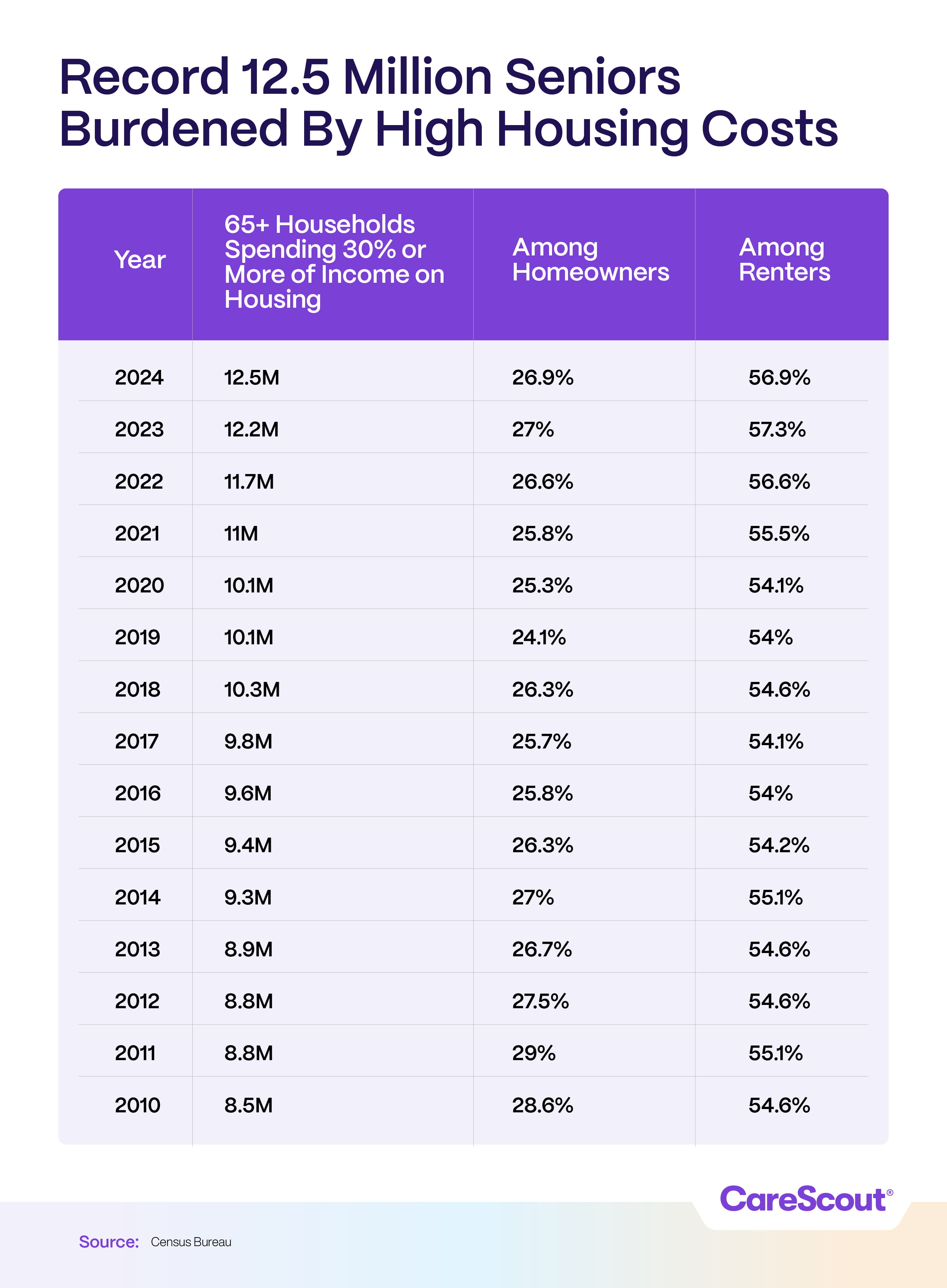
A record 12.5 million senior households are spending at least 30% of their income on housing, U.S. Census data shows – up from 9.3 million a decade earlier.
Since the pandemic, rent has increased by 36.2% nationally according to a 2026 Zillow report; property taxes have increased by nearly 25%; and home insurance premiums surged by 40.4%.
These staggering increases have proved insurmountable for many Americans, but no group has been more impacted than seniors, especially those on fixed incomes.
Since 2019, roughly half of all newly cost-burdened households have been headed by older adults, according to the Harvard Joint Center for Housing Studies.
Nationwide, renters are much more likely to feel the crunch: 56.9% of renter households headed by someone 65+ spent at least 30% of their income on housing in 2024, compared to 26.9% of homeowners, according to Census data.
Even seniors who did everything right aren't safe. For homeowners who paid off their mortgages entirely, median housing costs have still climbed 35% since 2019 – about 1.5 times faster than their incomes grew. For seniors who are unable to live alone, the median cost of an assisted living facility is now $6,200.
Property taxes, utilities and insurance are now eating away at their savings – and unlike younger Americans, many seniors can't simply take on a second job or trade up to a higher salary to compensate.
The consequences go beyond tight budgets. Fewer than 15% of adults 75 and older who live alone can afford both housing and basic long-term care services, according to the National Low Income Housing Coalition. When housing consumes the paycheck, it’s food, medication and health appointments that get cut.
This financial crisis is hiding in plain sight – but seniors are being hit harder in some places more than others.
To determine where seniors are the most and least impacted by housing costs, CareScout analyzed seven metrics in all 50 states and D.C. such as the share of seniors who spend 30% of their income on housing, real estate taxes, home insurance, electric bills, assisted living costs, and more. The complete methodology with links to sources is at the bottom.
Key Findings
Senior Housing Costs Are a National Pressure Point: A record 12.5 million senior households are cost-burdened, and the problem is particularly acute among the 56.9% of renters who spend at least 30% of their incomes on housing. That’s a sign that housing affordability challenges don't disappear at retirement age, and can be extra problematic for older adults on fixed incomes.
California Ranks No. 1, Most Cost-Burdened Seniors: Seniors are more likely to be cost-burdened in California than almost anywhere else (34.9% of homeowners and 62.8% of renters spend at least 30% of their income on housing), while its home-value-to-income ratio for adults 65+ is also among the highest in the country (10.6). Historically expensive states in the Northeast – plus Hawaii – round out the five most affected states.
West Virginia Ranks No. 51, Least Cost-Burdened Seniors: Driven by the nation's lowest property taxes ($881) and the smallest share of households facing high insurance costs (10.2% pay $2,000+). It leads among five Southern and Midwestern states where home values remain modest relative to senior incomes and cost burdens are well below average for both renters and homeowners.
Most Strained States
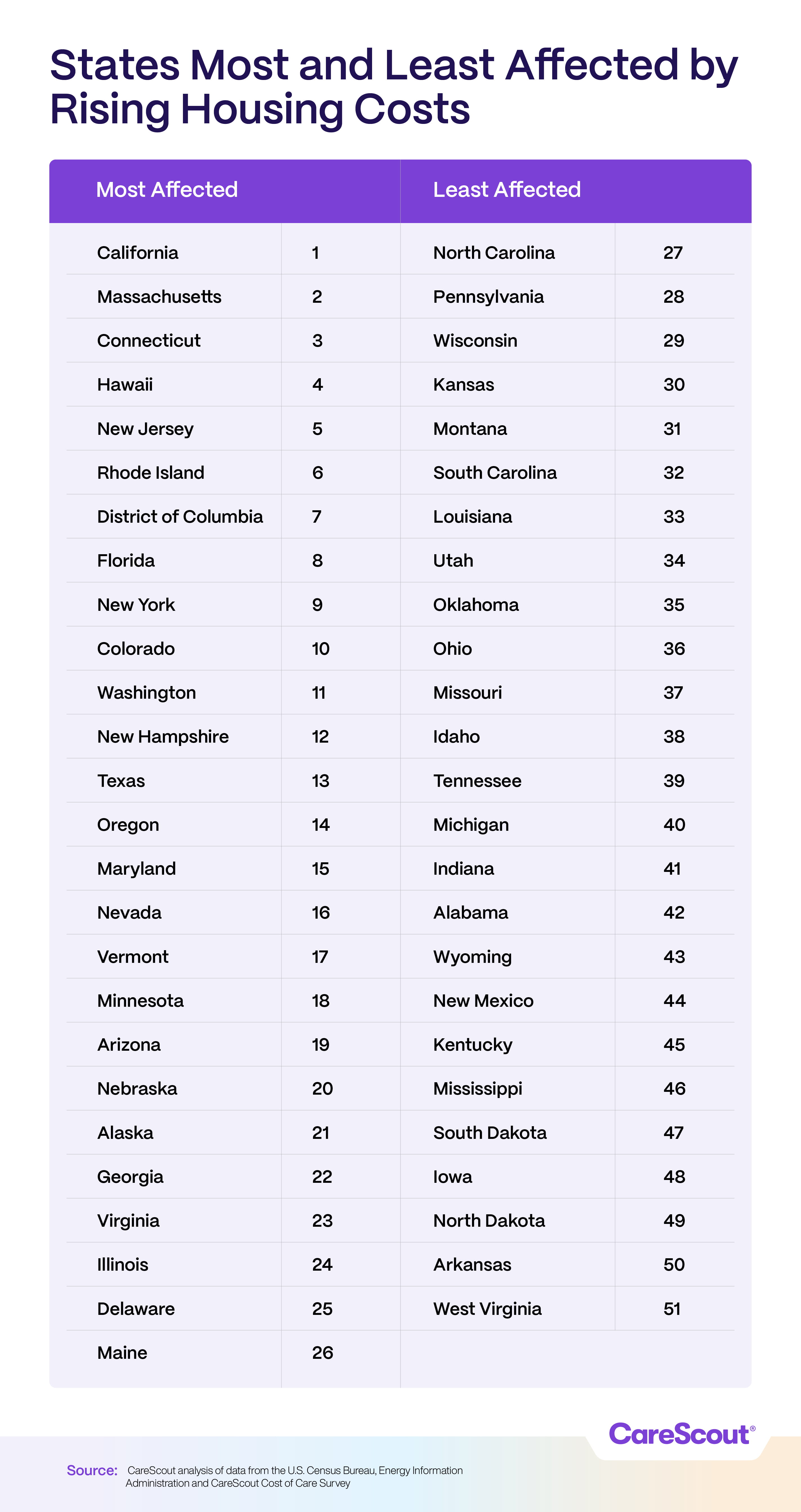
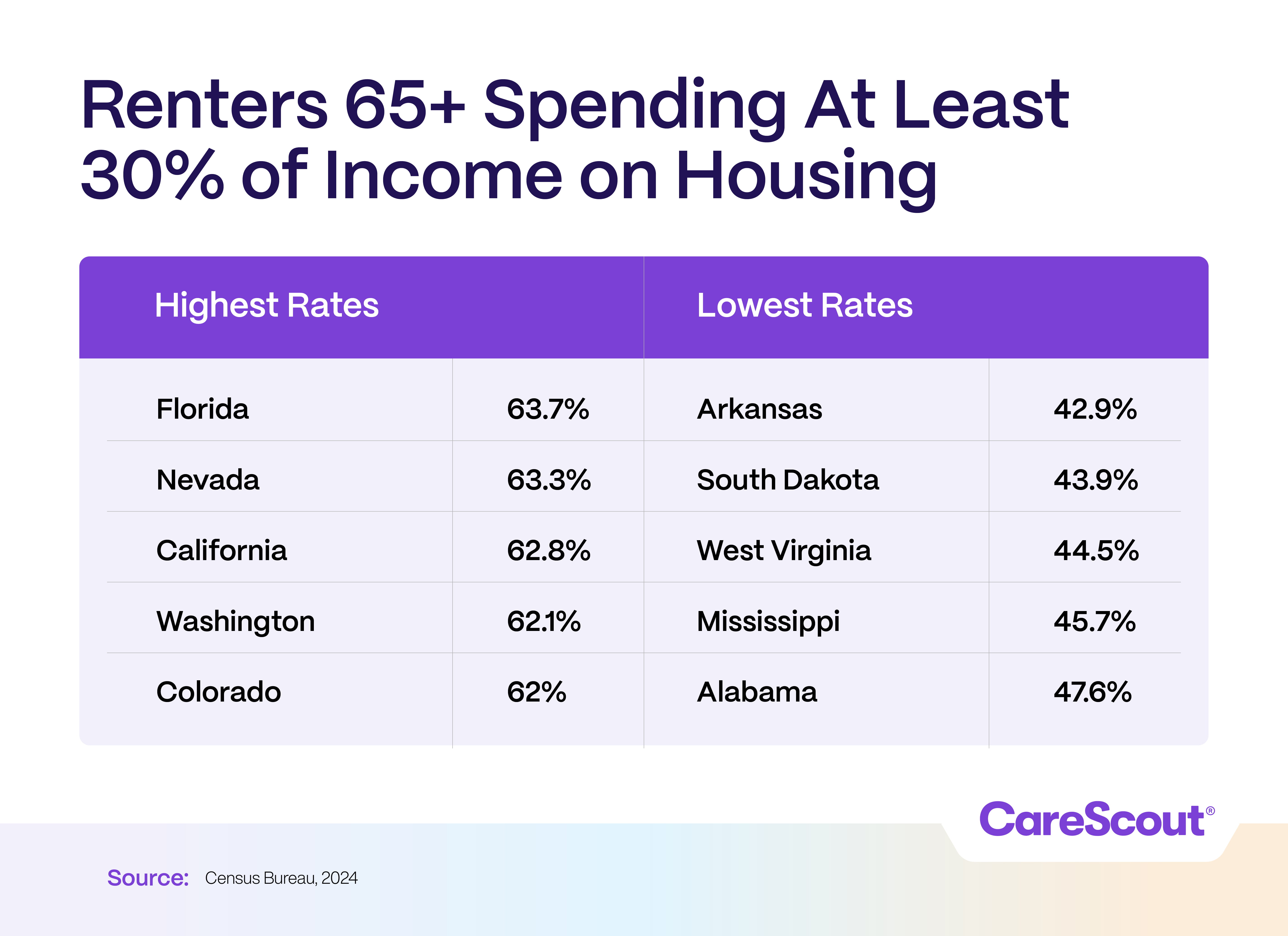
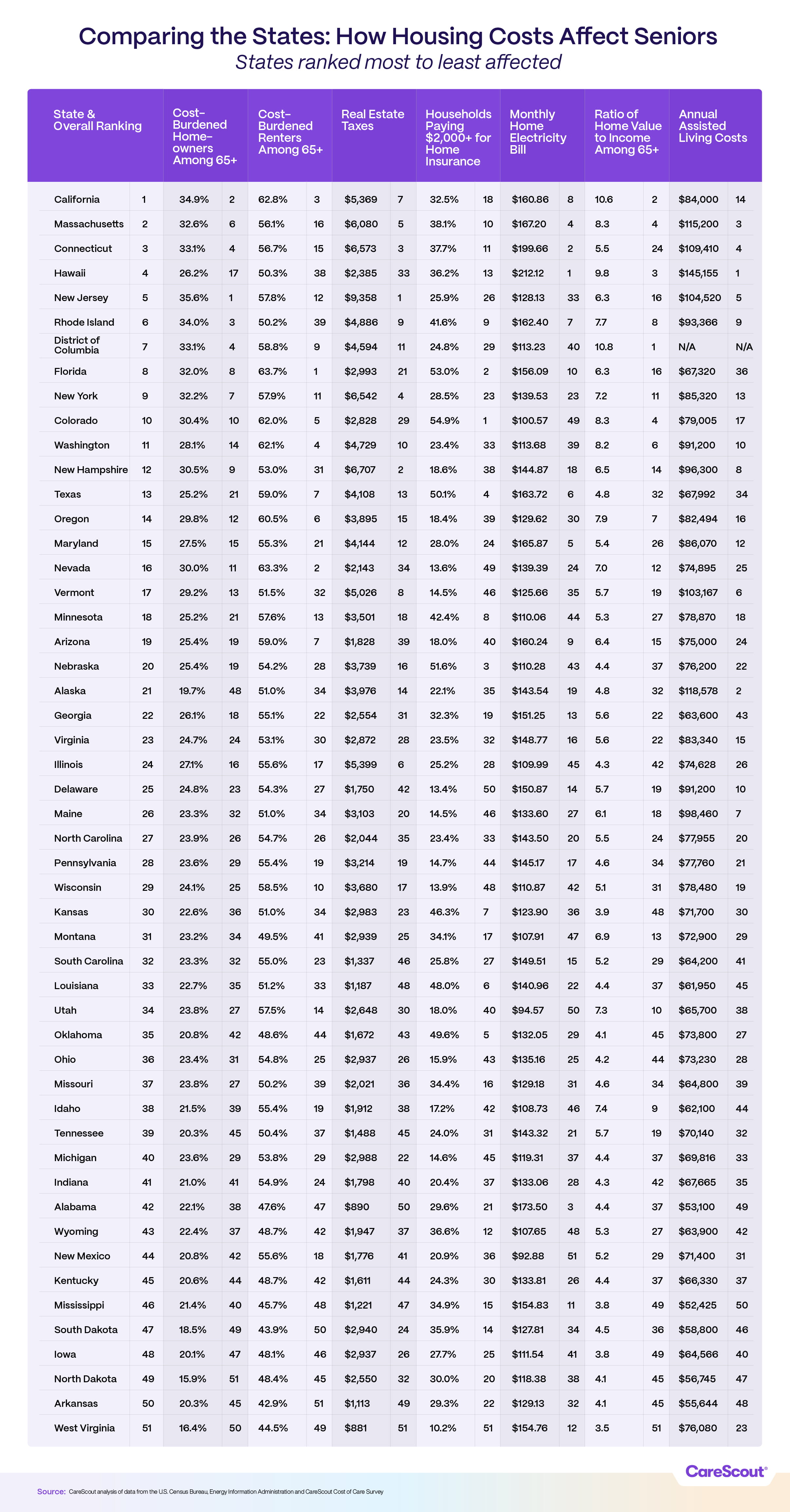
California ranks as the most strained state, driven by its high median home value relative to income among adults 65+ (10.6, No. 2 behind only Washington, D.C.). It also has the second-highest share of cost-burdened senior homeowners in the nation (34.9%) and steep real estate taxes ($5,369, No. 7). Nearly two-thirds of senior renters are cost-burdened (62.8%, No. 3), making California punishing regardless of whether seniors own or rent their homes.
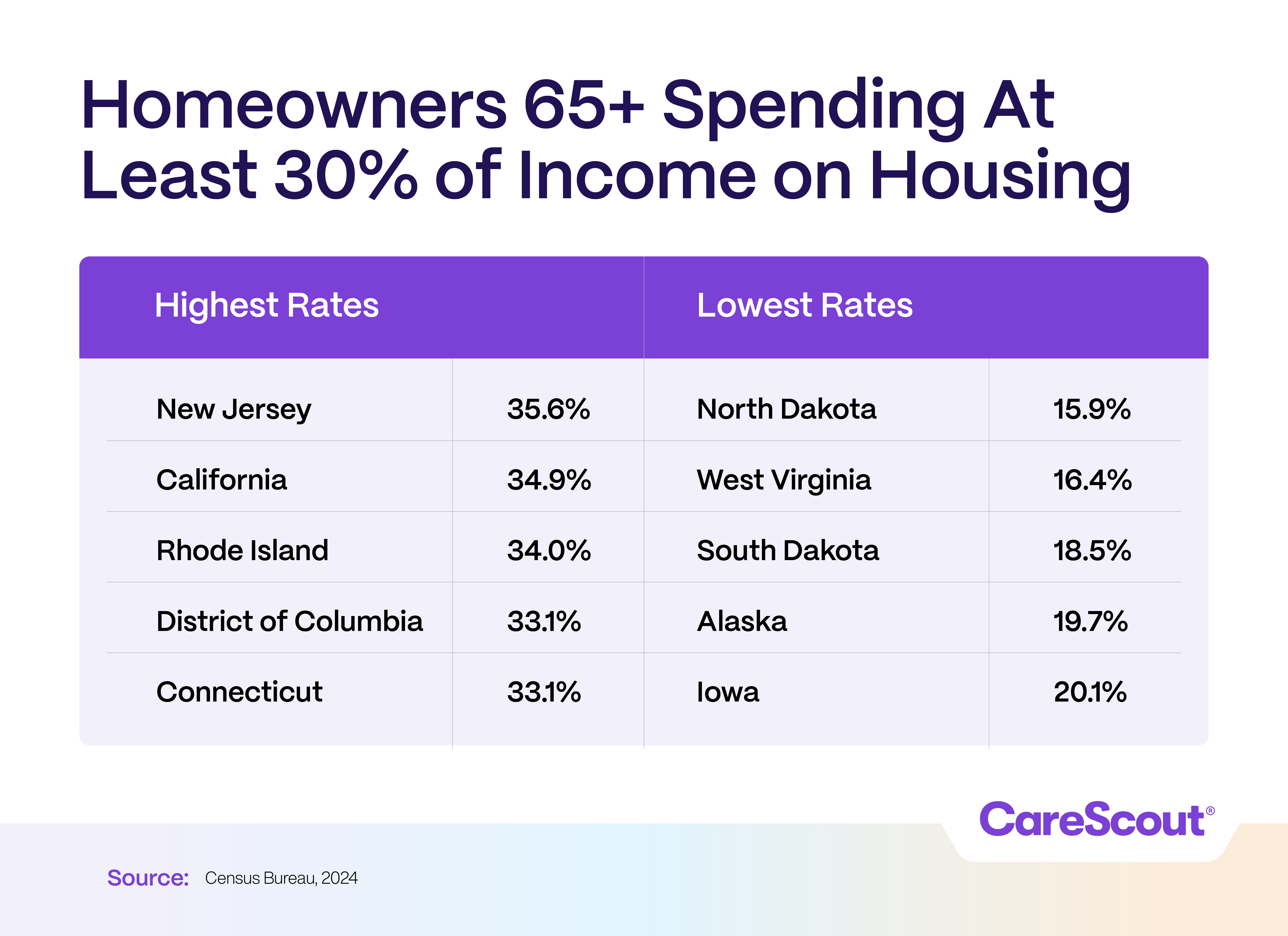
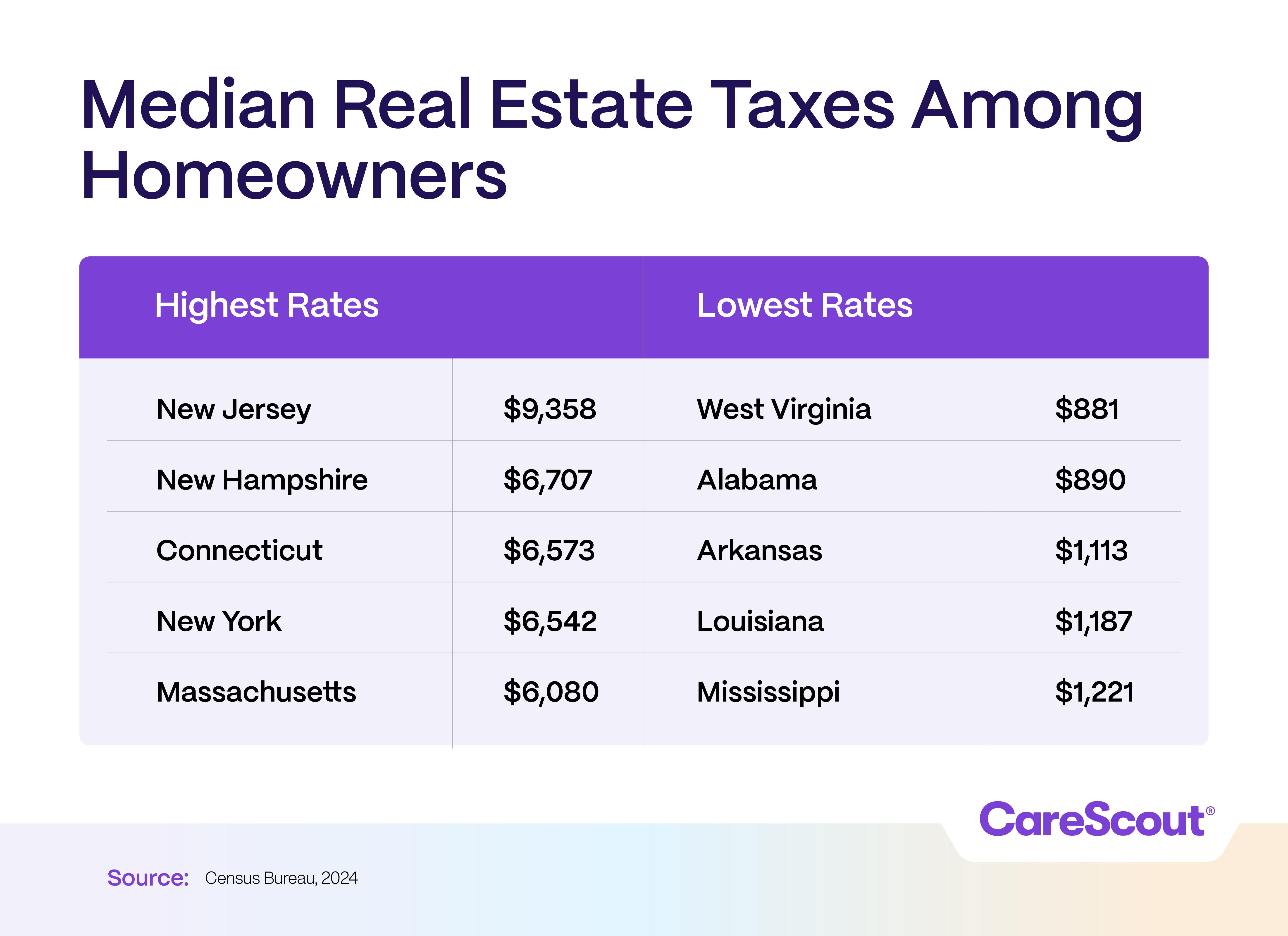
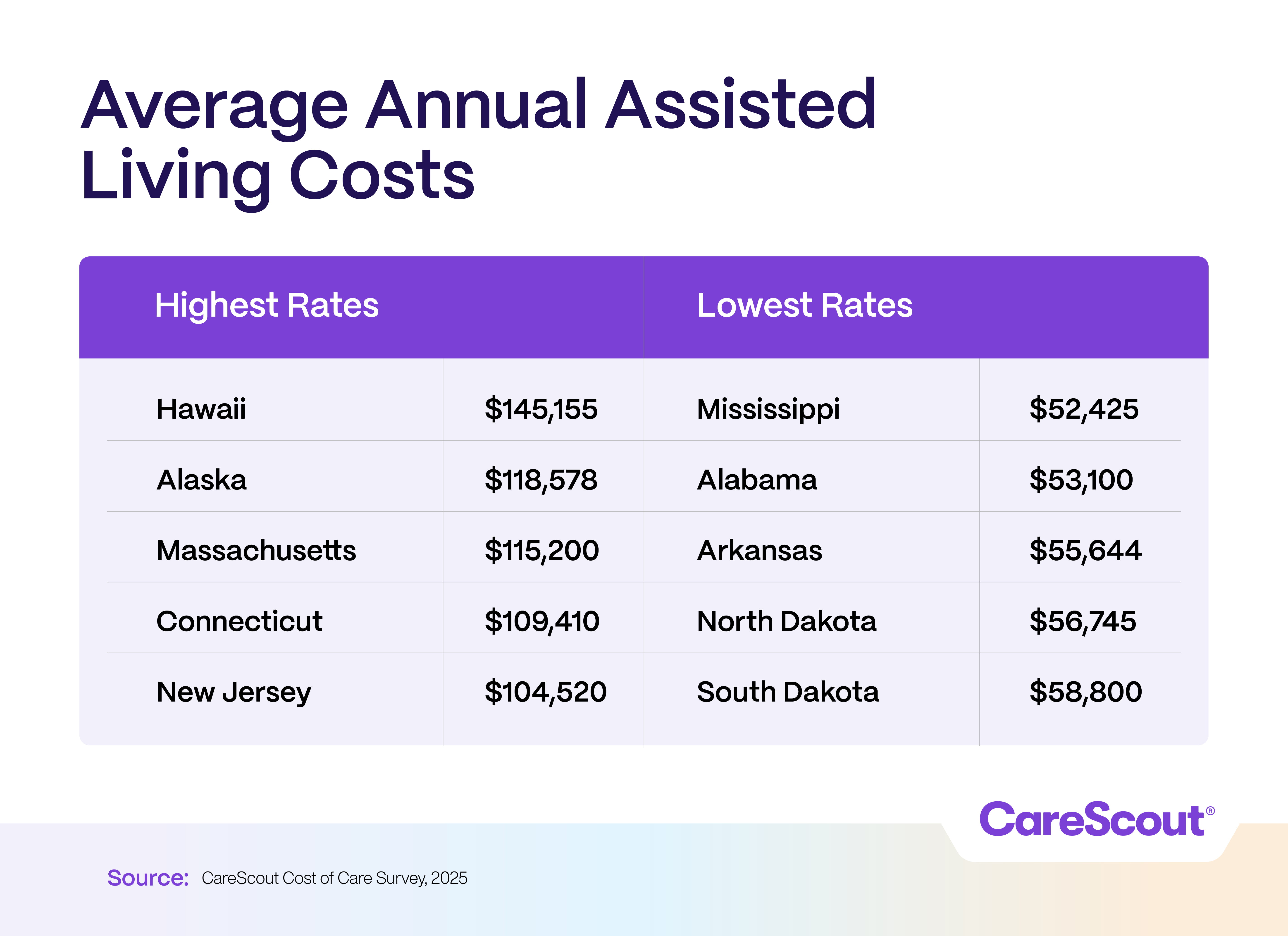
No. 2 Massachusetts, No. 3 Connecticut, No. 4 Hawaii and No. 5 New Jersey rounded out the five most-strained states, largely due to their high property taxes, high home values relative to senior incomes and expensive home electricity. New Jersey carries the highest real estate taxes in the nation ($9,358) and the highest share of cost-burdened senior homeowners (35.6%). Connecticut and Massachusetts both rank among the states with the highest electricity costs (No. 2 and No. 4, respectively) and assisted living costs (No. 4 and No. 3).
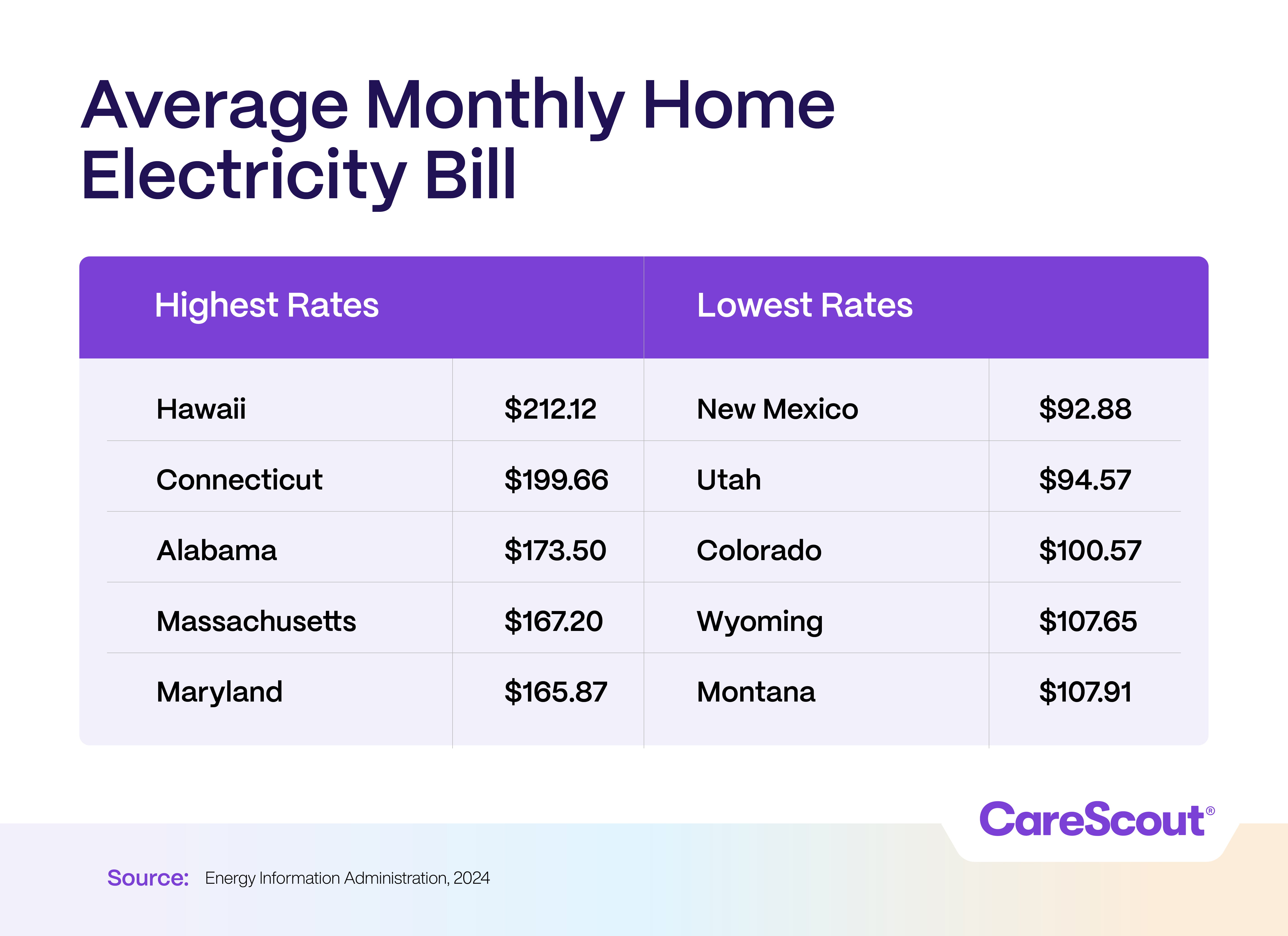
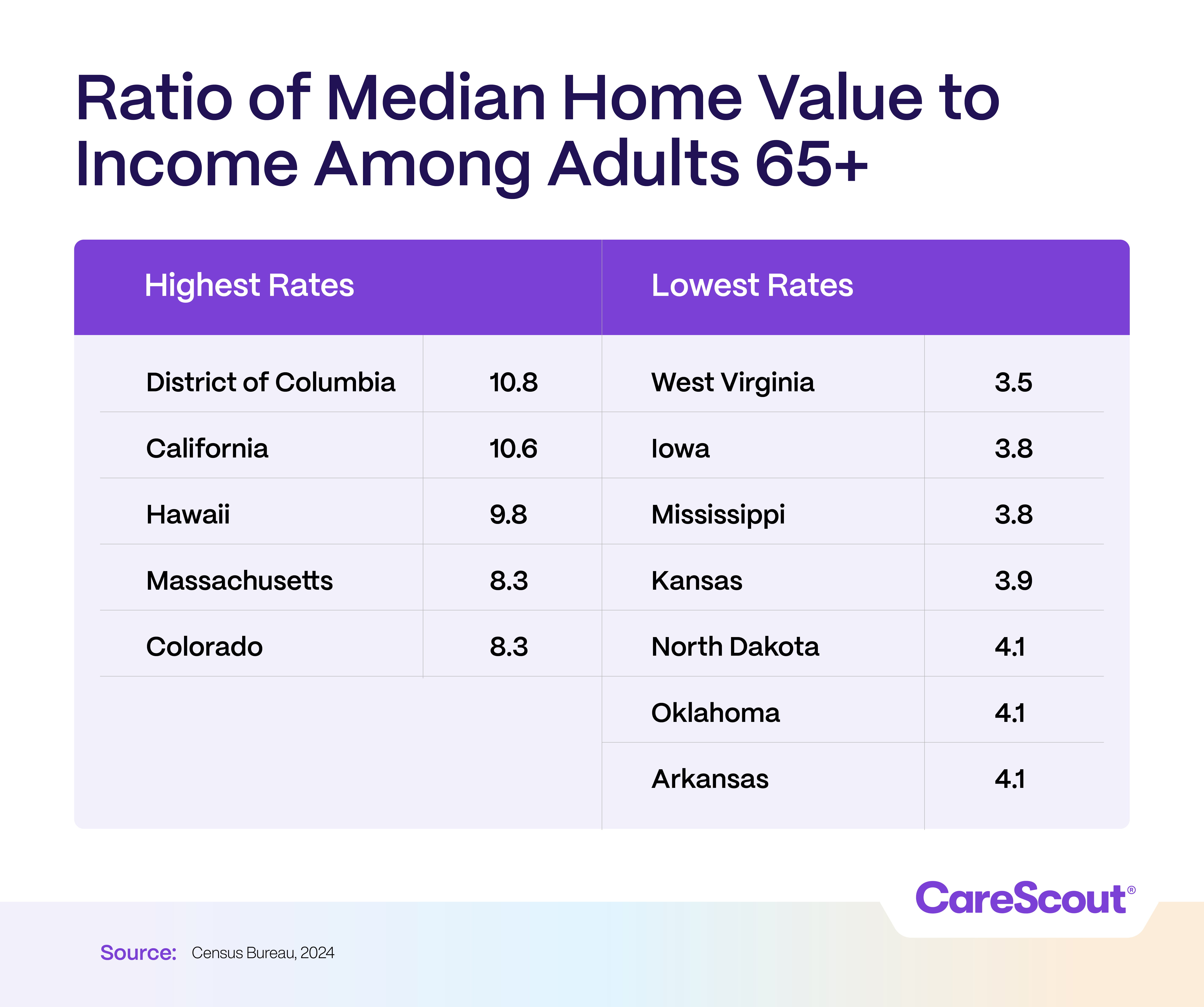
Hawaii is something of a different case. Its senior renter cost-burden rate is relatively contained (50.3%, No. 38) and its real estate taxes are modest ($2,385, No. 33), but it is dragged by the nation's highest electricity bill ($212.12/month), a sky-high home-value-to-income ratio (9.8, No. 3) and the most expensive assisted living costs in the country ($145,155).
Least Strained States
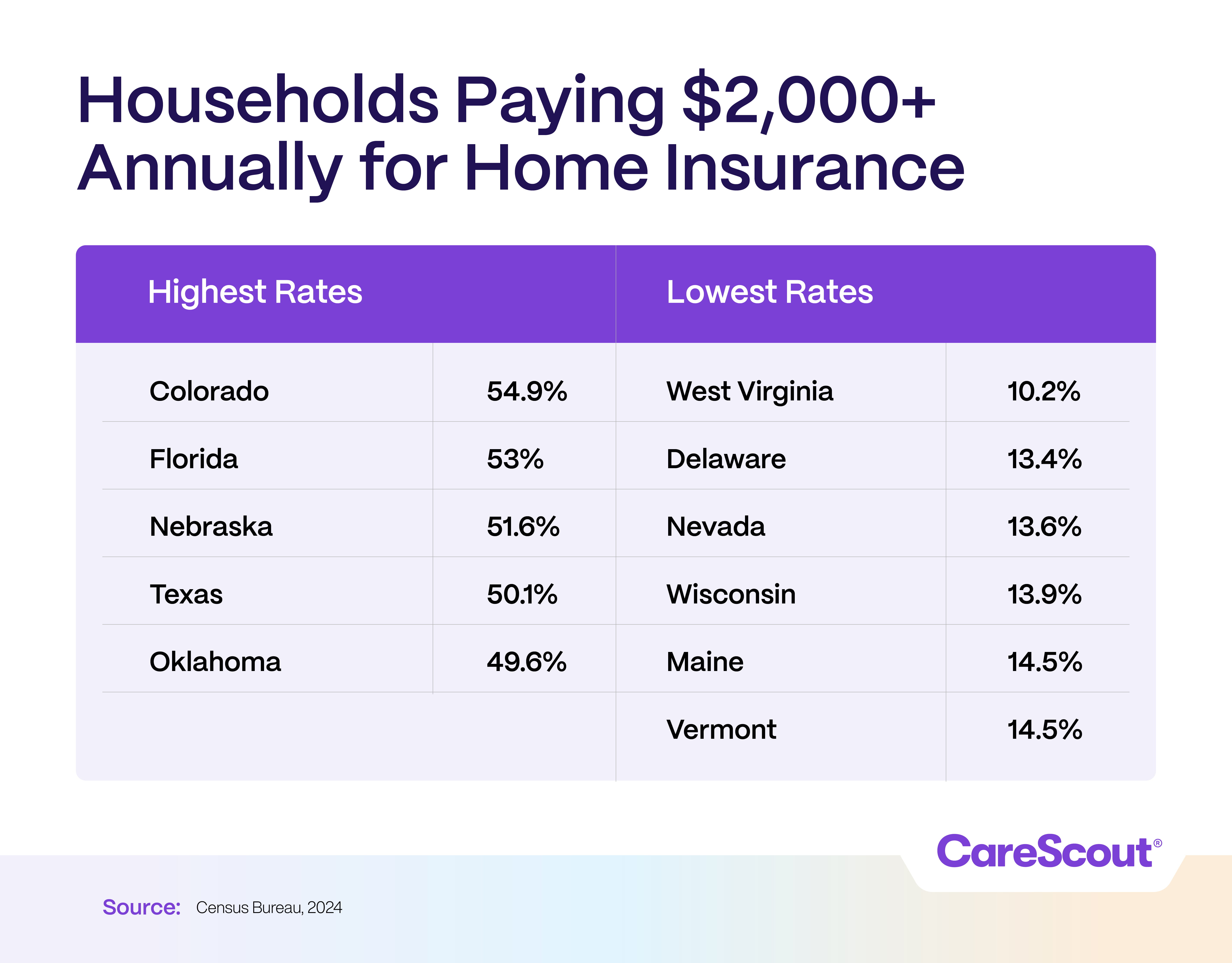
West Virginia ranks as the least-strained state because it has the lowest median real estate taxes in the nation ($881), the smallest share of households paying $2,000 or more annually for home insurance (10.2%) and a low cost-burden rate among both senior homeowners (16.4%, No. 50) and renters (44.5%, No. 49). Its home-value-to-income ratio is also the most favorable in the country (3.5), reflecting just how accessible its housing market is relative to what seniors actually earn. Its main weakness is home electricity costs ($154.76/month, No. 12).
The rest of the least-strained states – No. 50 Arkansas, No. 49 North Dakota, No. 48 Iowa and No. 47 South Dakota – are all Southern or Midwestern states with low housing costs and affordable home values relative to senior incomes. North Dakota stands out for having the lowest share of cost-burdened senior homeowners in the nation (15.9%), while Arkansas leads all states for renters, with 42.9% of senior renters spending 30% or more of their income on housing.
Meanwhile, Iowa pairs a lower home-value-to-income ratio (3.8, No. 49) with relatively affordable assisted living costs ($64,566, No. 40). South Dakota's weakest spot is home insurance – 35.9% of households pay $2,000 or more annually (No. 14) – though low senior cost-burden rates among both homeowners (18.5%, No. 49) and renters (43.9%, No. 50) keep it firmly in the top five.
Top and Bottom States Across the Metrics
Compare how the top- and bottom-ranking states stack up across the seven key metrics we used to determine how housing costs are affecting seniors across the U.S.
Cost-burdened homeowners: Even owning a home outright is no guarantee of housing security – high rates here signal that ongoing costs are overwhelming seniors' incomes.
Cost-burdened renters: The most direct measure of housing stress, capturing seniors with the least financial cushion and fewest options when costs rise.
Real estate taxes: A hidden pressure point that drives up costs even for seniors who are mortgage-free.
Home insurance costs: A fast-rising expense that has become a significant burden, particularly in states with growing climate risk.
Home electricity bills: A daily, unavoidable cost that compounds housing unaffordability, especially for seniors who spend more time at home.
Home value relative to household income: A higher ratio indicates that seniors’ wealth is more concentrated in home equity relative to their cash income. While this can be beneficial in some cases, it may also signal financial vulnerability for seniors facing rising day-to-day housing costs, despite holding significant assets.
Assisted living costs: A forward-looking pressure, given seniors who manage housing costs today may face a much steeper bill if their care needs change.
3 Ways Seniors Can Protect Against Rising Housing Costs
Work with a financial advisor and a real estate expert. A financial advisor who specializes in retirement planning can help you model future cost scenarios and identify strategies like downsizing or tapping home equity at the right time. A real estate professional can ensure any housing decisions – buying, selling or renting – are made with current market realities in mind.
Plan before a health crisis forces your hand. A sudden health emergency can make rising housing costs catastrophic, leaving seniors scrambling to cover both medical bills and a mortgage or rent at the same time. A CareScout Care Plan can help you map out a plan in advance whether that means aging in place or transitioning to a senior living facility; and long-term care insurance can help offset long-term care expenses, easing the financial burden so seniors can focus on getting the care they need.
Look into property tax relief programs in your area. Many states and localities offer property tax exemptions, freezes or deferrals specifically for seniors that go widely unclaimed. Checking your eligibility could meaningfully reduce one of your largest fixed costs with relatively little effort. Visiting usa.gov/benefits is a good place to start.
View The Complete Data
View how your state compares on the housing cost burden for seniors in the graphic below.
Conclusion
Housing costs are squeezing seniors across every state, but where you live still determines how hard you're hit. This analysis makes that gap concrete: the distance between the most and least affordable markets for older Americans is vast, and in some places it has widened sharply in just the past few years. For seniors on fixed incomes, that can mean the difference between stability and an impossible set of choices. Planning ahead, understanding local market conditions and knowing what financial tools are available has never mattered more.
Methodology
We used the most recent data for seven metrics to determine where seniors are the most and least impacted by rising housing costs. We used a Z-score distribution to scale each metric relative to the mean across all 50 states and Washington, D.C., and capped outliers at +/-3. A state’s overall ranking was calculated by averaging its Z-scores across all available metrics. Washington, D.C. was missing data on assisted living costs, so its overall ranking was based on the remaining six metrics. States were ranked from most affected to least affected by housing costs.
Here’s a closer look at the metrics we used:
Share of homeowners ages 65+ who spend 30% or more of their income on housing (Census Bureau, 2024)
Share of renters ages 65+ who spend 30% or more of their income on housing (Census Bureau, 2024)
Median real estate taxes paid by homeowners (Census Bureau, 2024)
Share of households paying $2,000 or more annually on home insurance (Census Bureau, 2024)
Average monthly home electricity bill (Energy Information Administration, 2024)
Ratio of median home value to household income among adults 65+ (Census Bureau, 2024)
Median annual assisted living costs (CareScout Cost of Care Survey, 2025)
Written by


Christine Healy
Christine Healy is the Head of Brand at CareScout. A growth strategist with over two decades of experience, Christine specializes in scaling mission-driven organizations across aging care, early education, and educational travel. She has previously held executive marketing roles at Bright Horizon...