
Home safety checklist for caregivers


Ensuring home safety for older adults is essential, as most falls and injuries occur in the home, especially in high-risk areas such as bathrooms, bedrooms, stairs, and kitchens. As a caregiver, you can identify potential hazards and make practical modifications tailored to your loved one's needs.
Home isn’t just a place. In the words of French philosopher Gaston Bachelard, “our house is our corner of the world.”1
As a caregiver, you want your loved one to feel safe and supported. There are plenty of home modifications you can do when care is needed, but it can be hard to know where to start.
To help you out, we’ve created a home safety checklist that will help you ensure your loved one’s “corner of the world” is comfortable and safe.
Why home safety is essential for older adults
Everyone should feel safe in their home, but one of the biggest safety risks at home are falls. They’re the leading cause of injury for adults over 65, and most falls happen at home.2 Bathrooms, bedrooms, stairs, and kitchens can be especially risky.
Making a home safer can start with identifying room by room what might be hazardous for the older adult in your life. That rug that’s been in the hallway for the past 30 years? That can become dangerous once a walker, cane, or unsteady gate enters the picture.
General home safety checklist
As you start thinking about home safety, give yourself a tour of the place your loved one is living and ask yourself questions such as:
Could someone trip here?
Could my loved one reach for help if they need it?
Would this be difficult to navigate at night?
Are there home repairs needed?
What specific needs does my loved one have?
Lighting
Poor lighting can be an underestimated hazard, especially at night.
Are you and your loved one comfortable with the amount of lighting throughout the house?
Are there nightlights in hallways, bathrooms, and bedrooms?
Are there motion sensor lights?
Are light switches easy to reach?
Are there voice activated lights?
Emergency access
Emergencies don’t always happen, but it’s a good idea to make sure your loved one can get help quickly if they need it.
Have you customized the accessibility features on your loved one’s phone?
Does your loved one have a medical alert device?
Are there carbon monoxide and smoke detectors installed in each room?
A room-by-room home safety checklist
Let’s go room by room and look at some of the key areas to assess:
Bedroom
Your home is your sanctuary, offering comfort and safety. The bedroom, in particular, ought to be the most relaxing and secure space — it's where you rest and recharge each night. As you assess your loved one’s bedroom, ask yourself:
Are light switches accessible, or are there voice-activated lights?
Are clothing and other items easy to reach in a closet or dresser?
Is there access to a phone or phone charger near the bed?
Is the bed at a height that's easy to get in and out of?
Is there a pathway around the bed and the room?
Bathroom
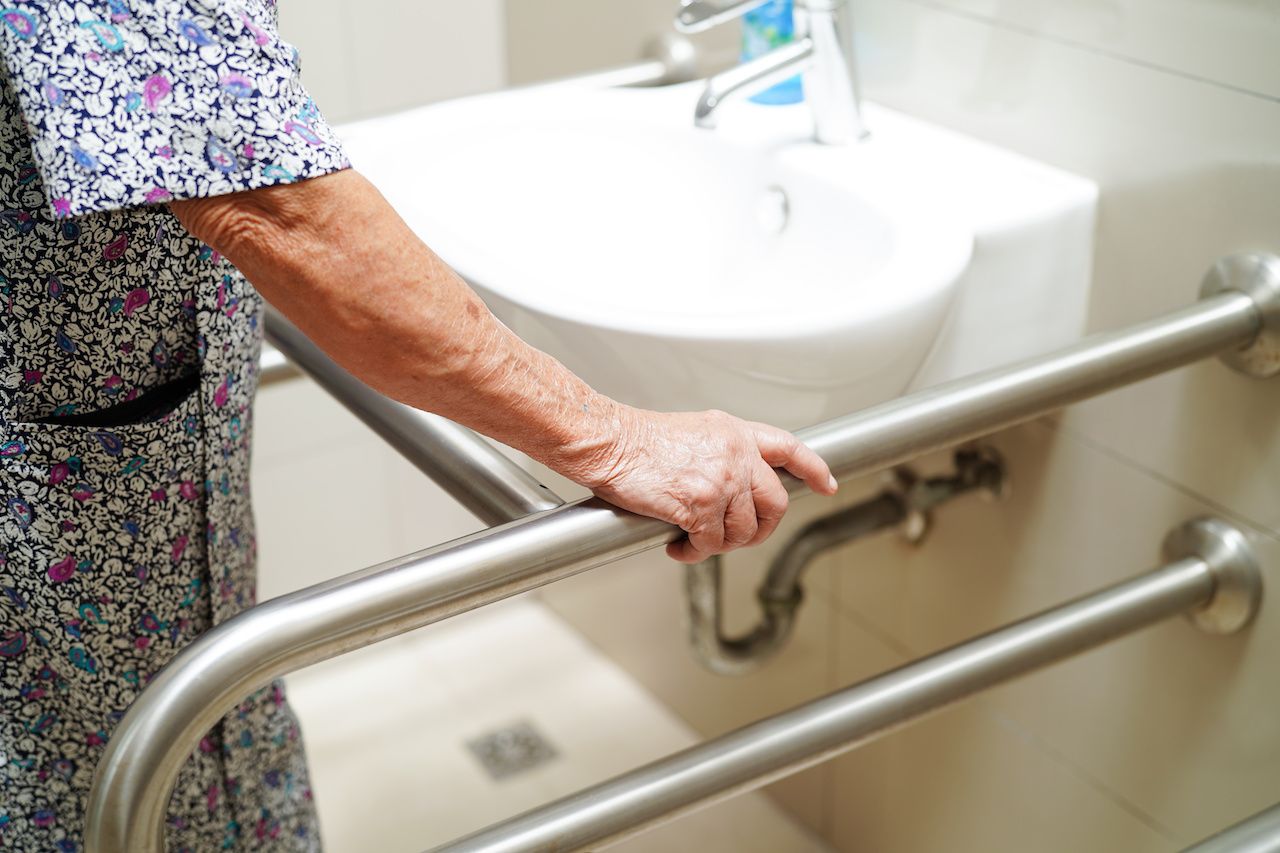
Bathrooms can be one of the most common places for falls to occur because of wet surfaces and tight spaces. Here are some tips to help keep your bathroom safe:
Are there grab bars near the toilet, tub, or shower area to support balance?
Are there non-slip mats in the tub or shower?
Would a bench or stool help with bathing or showering?
Is there a handheld shower head to assist with bathing?
Does the toilet have handles or a raised seat to make getting up and down easier?
Kitchen
The kitchen is the heart of the home. It’s where everyone can gather and be nourished. It’s also where you might find open flames on the stove, liquid spills on the floor, or food that’s turning into a science experiment in the refrigerator. Here are some questions to ask as you walk through the kitchen:
Are there safety knobs or auto shut-offs installed on the stove?
Is the refrigerator and cabinet stocked with enough food?
Are dishes (plates, bowls, silverware) in easily accessible drawers or cabinets?
Living rooms, stairs, hallways
Anywhere with stairs or a step — front entryways, basements, or one of those cool conversation pits from the 1970s — deserves some extra attention.
Are there any tripping hazards (items, wires, rugs, uneven thresholds)?
Does the flooring change (tile, rug, hardwood) by room?
Are the stair handrails sturdy and do you need two railings?
Is there any clutter on the walkways or stairs that could be a tripping hazard?
Are there rugs in the hallways or on the stairs?
While they can be expensive, you may want to consider installing a chair lift on your stairs if your loved one needs to access the second floor.
Home safety checklist for dementia caregivers
If your loved one is living with dementia, you may want to take your safety planning a step further to make sure your loved one can live their life as fully as possible.
Home safety to consider as a dementia caregiver:
Locking or securing medications, cleaning products, alcohol, and sharp objects
Using safety measures for kitchen appliances, such as knob covers, auto shut-off appliances, or disabling the appliances if needed
Installing door locks above or below eye level to reduce wandering
Using monitoring tools such as in-home cameras, WanderGuard systems, or GPS-enabled fall alerts
How to talk to your loved one about home safety
When you talk to your loved one about home safety, approach the conversation with support, keep them involved with decisions while offering choices, and connect safety choices to their aging goals.
For example, if your loved one has experienced a fall or you’re worried they might fall in their home, you can use these tips to talk to them about home safety:
Lead with support, not criticism
Instead of: “You really shouldn’t be using those stairs anymore. You’re going to fall.”
Try: “I care about you and want you to stay safe at home. I’ve noticed the stairs seem harder lately, and I want to make sure you’re comfortable and steady using them.”
Offer choices
Instead of: “You need to put grab bars in the bathroom”
Try: “There are a few ways we could make the bathroom safer with grab bars, a non-slip mat, or better lighting. What would help you best?”
Connect home safety changes to aging goals
Instead of: “If you fall, you won’t be able to live here anymore.”
Try: “Making a few home safety upgrades can help you age in place.”
When to consider additional support
Going through a home safety checklist and making modifications can help make your loved one’s home (or your home if they live with you) a safer and more welcoming place to live.
But there may be a time when more support is needed. You may want to consider other aging care options if:
Your loved one needs support with the activities of daily living (ADLs) or instrumental activities of daily living (IADLs)
Your loved one’s care needs increase
You want support so you can manage other responsibilities in your life
Dementia-related risks increase despite safety measures
Schedule a Care Plan
If you’re unsure if your loved one is safe in their home, a Care Plan can help. A Care Plan can provide personalized recommendations for care, giving you the guidance you need to create a better path forward.
Expert reviewed by


Sean Hordes, LSW
Sean is a licensed social worker and Care Advocate for CareScout who also helps the sourcing team. He has been working at CareScout for nine years and has held various roles assisting customers and working with providers. He is passionate about helping older adults and...
Written by

Brian Dowd
Brian is writer based in New England. He is a passionate storyteller with a knack for finding the extraordinary in the ordinary. He joined CareScout as a Senior Content Writer in 2024. Before that, he worked as a content writer in the senior living industry and worked for several years as an assi...