
Where is it safest to retire? New CareScout analysis looks beyond cost of living


-Property Crimes Against Seniors Are Up 3.9x Over Past Decade
-New Jersey the Safest State to Retire, Arizona Most Dangerous
For many Americans, deciding where to retire is driven by factors like affordability, climate and proximity to family. But as people live longer, another consideration is becoming increasingly important: how well a community supports healthy, safe aging.
A new CareScout analysis examined seven measures that can influence quality of life for older adults—including fraud, crime, falls, roadway safety, hospital access and public safety—to identify the safest and most challenging states for retirement.
The analysis also found that reported crimes involving older adults have increased over the past decade, underscoring why planning for later life means looking beyond traditional retirement factors. While serious incidents remain relatively uncommon, the findings reinforce the importance of choosing communities that support safety, access to care and healthy aging.
These trends carry real implications for the millions of Americans approaching retirement, as well as for adult children helping aging parents navigate decisions about where to spend their later years. There are dramatic differences in safety from state to state. A senior's risk of falling victim to fraud or a preventable accident varies depending on where they live, and these differences can be just as consequential as the tragic, headline-grabbing cases.
That's why CareScout set out to identify the safest and most dangerous states to retire in 2026. We analyzed the most recent federal data across seven key indicators: rates of elder fraud, violent crime, property crime, police presence, fall-related deaths, fatal car crashes involving older drivers and access to hospital care.
Here’s what we found.
Key Findings
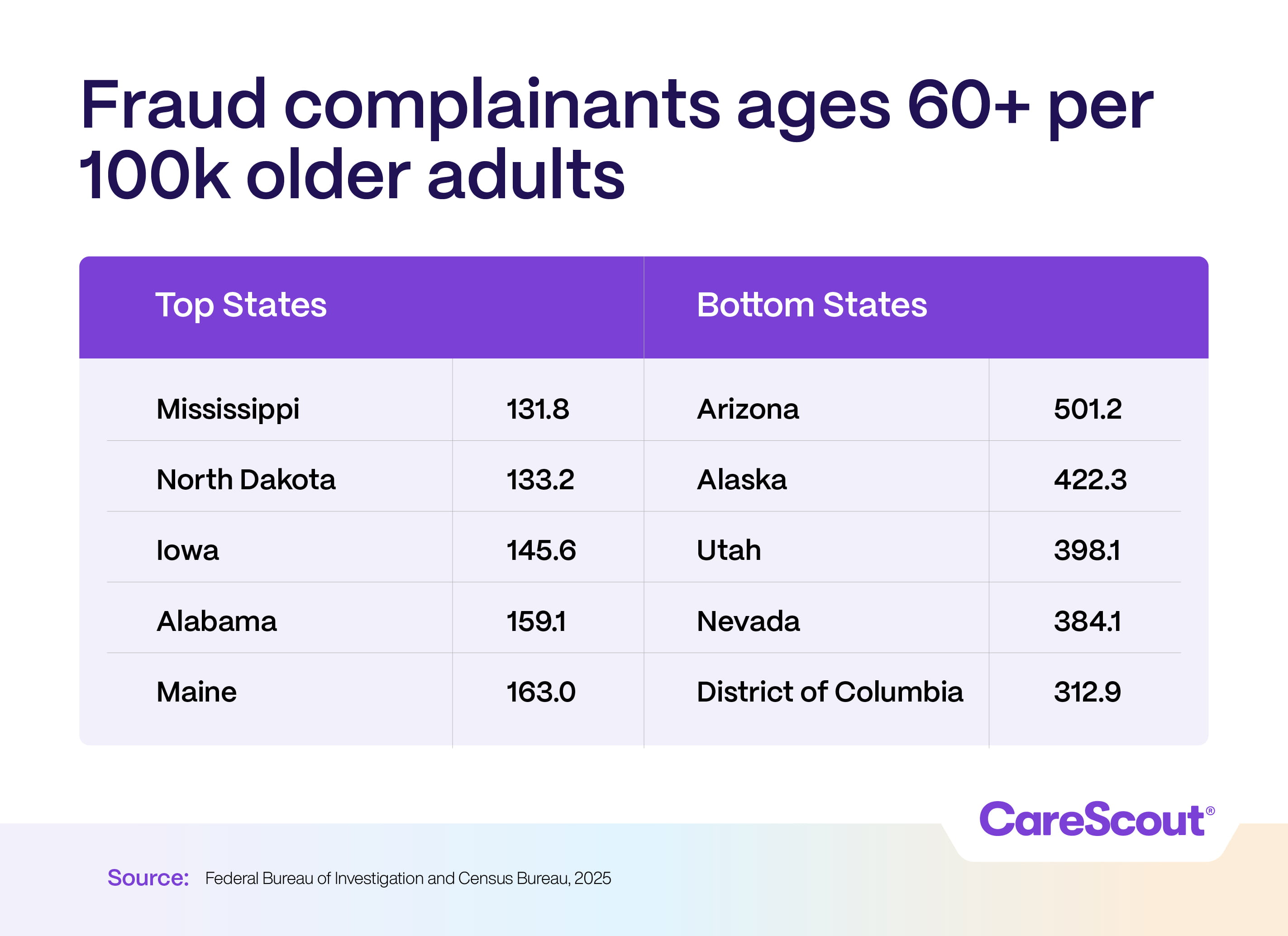
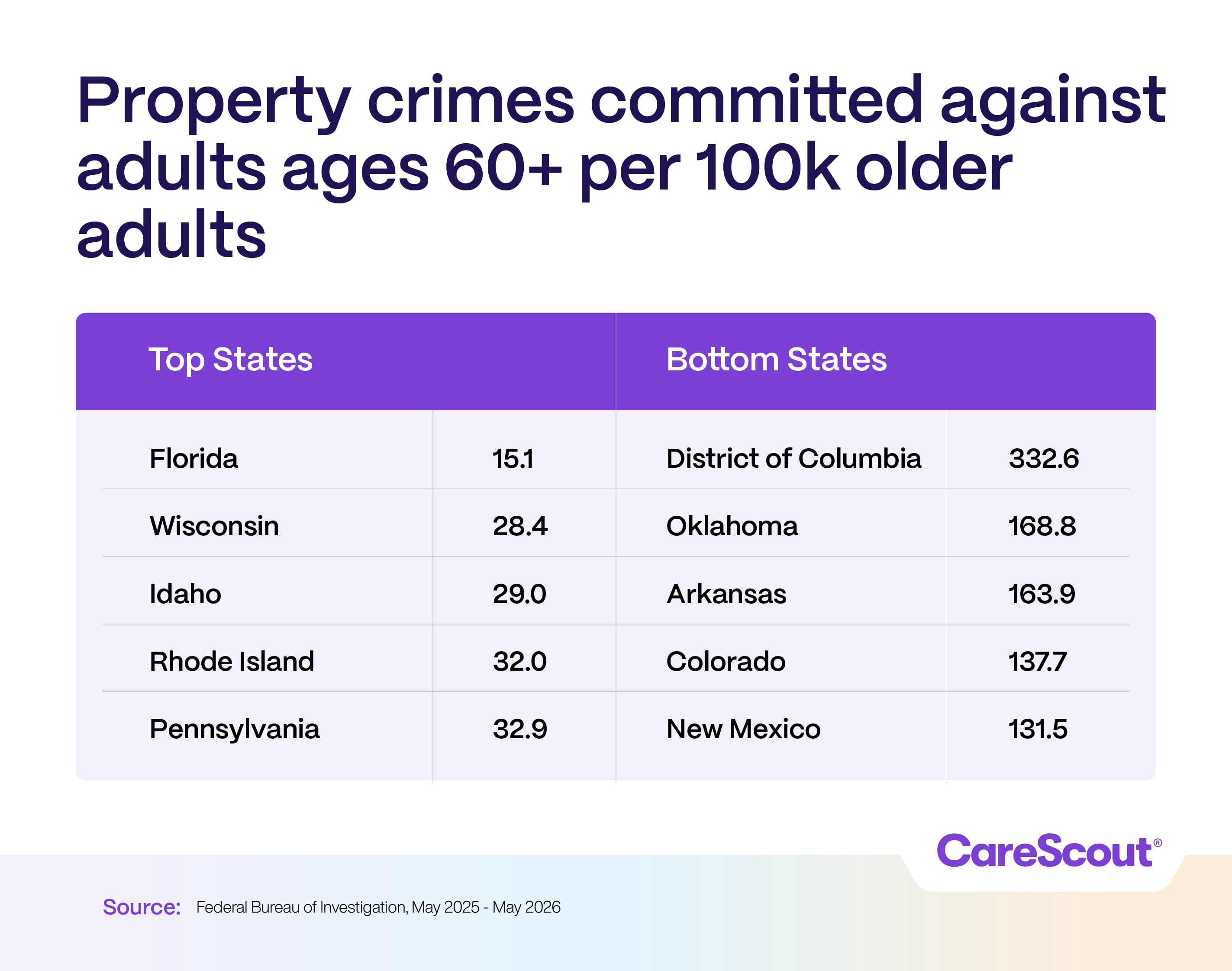
Property Crime Involving Seniors Has Increased Over the Past Decade: Nationally in 2025, there were 769.8 property crimes involving individuals age 60+ per 100,000 seniors, up from 473.7 per 100,000 in 2015. A growing share of crimes targeting older adults involve fraud and scams perpetrated online or over the phone, with the FBI receiving more than 201,000 fraud complaints from victims age 60+ in 2025 alone. The violent crime rate also rose from 23.3 to 91.4 per 100,000 seniors during that period.
Arizona Ranked Lowest in CareScout’s Analysis: Arizona ranked last overall due largely to the nation’s highest reported rate of elder fraud (501.2 complainants per 100,000 seniors) and limited hospital bed availability (10.9 beds per 1,000 Medicare enrollees). While the state ranked near the middle nationally for violent crime against older adults, these other factors contributed to its overall ranking.
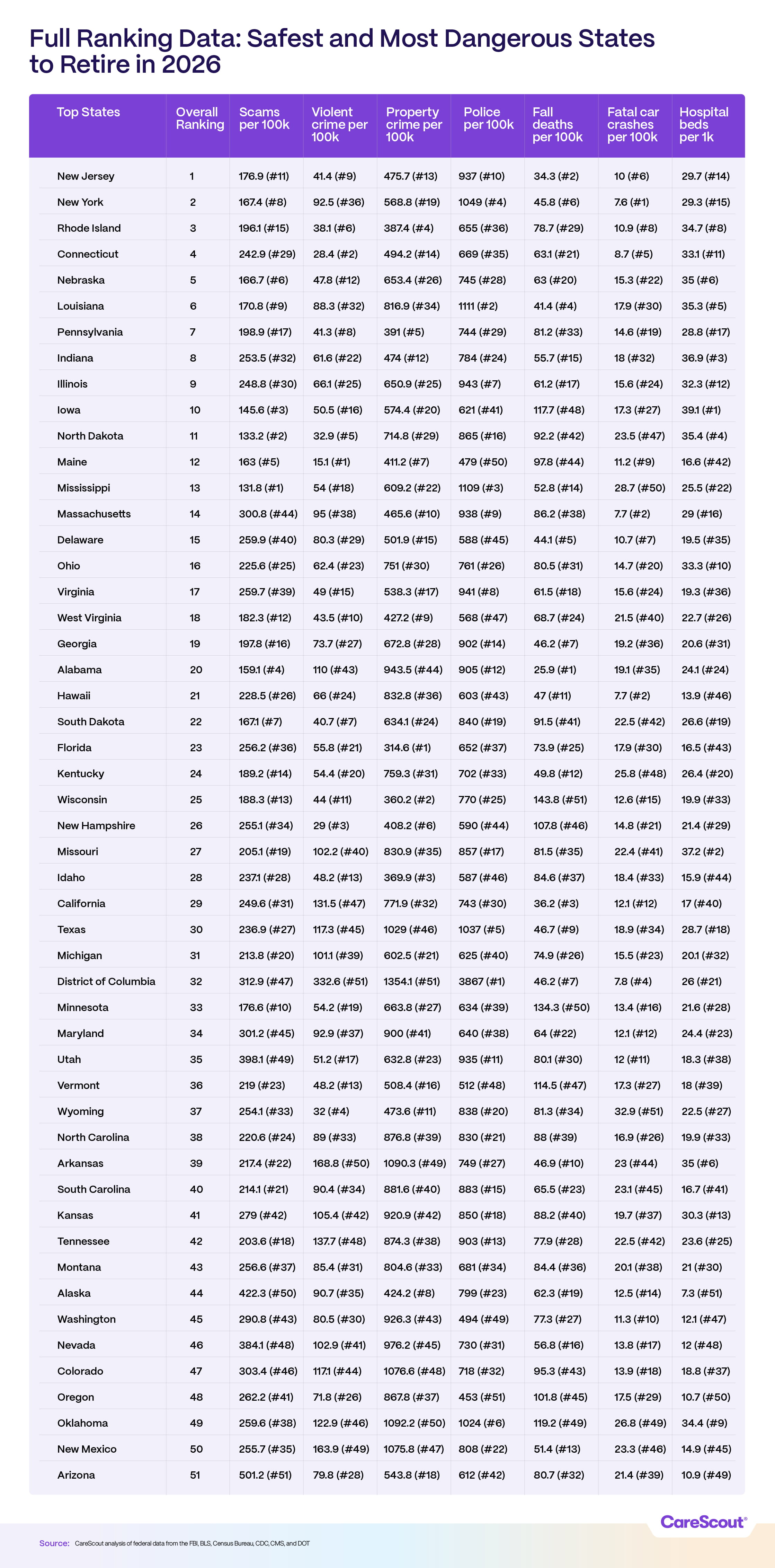
New Jersey Is the Safest State to Retire: It boasts some of the lowest death rates from falls (34.3 per 100k seniors) and senior-involved car accidents (10 per 100k), as well as a strong police presence (937 officers per 100k, ranking 10th) and low rates of elder fraud and crime rates, giving New Jersey’s seniors peace of mind.
Northeast Dominates the Top 10: Five of the top 10 states (No. 1 New Jersey, No. 2 New York, No. 3 Rhode Island, No. 4 Connecticut and No. 7 Pennsylvania) are in the Northeast, where seniors benefit from strong hospital bed availability, low elder fraud rates and in some cases, low rates of violent and property crime against older adults.
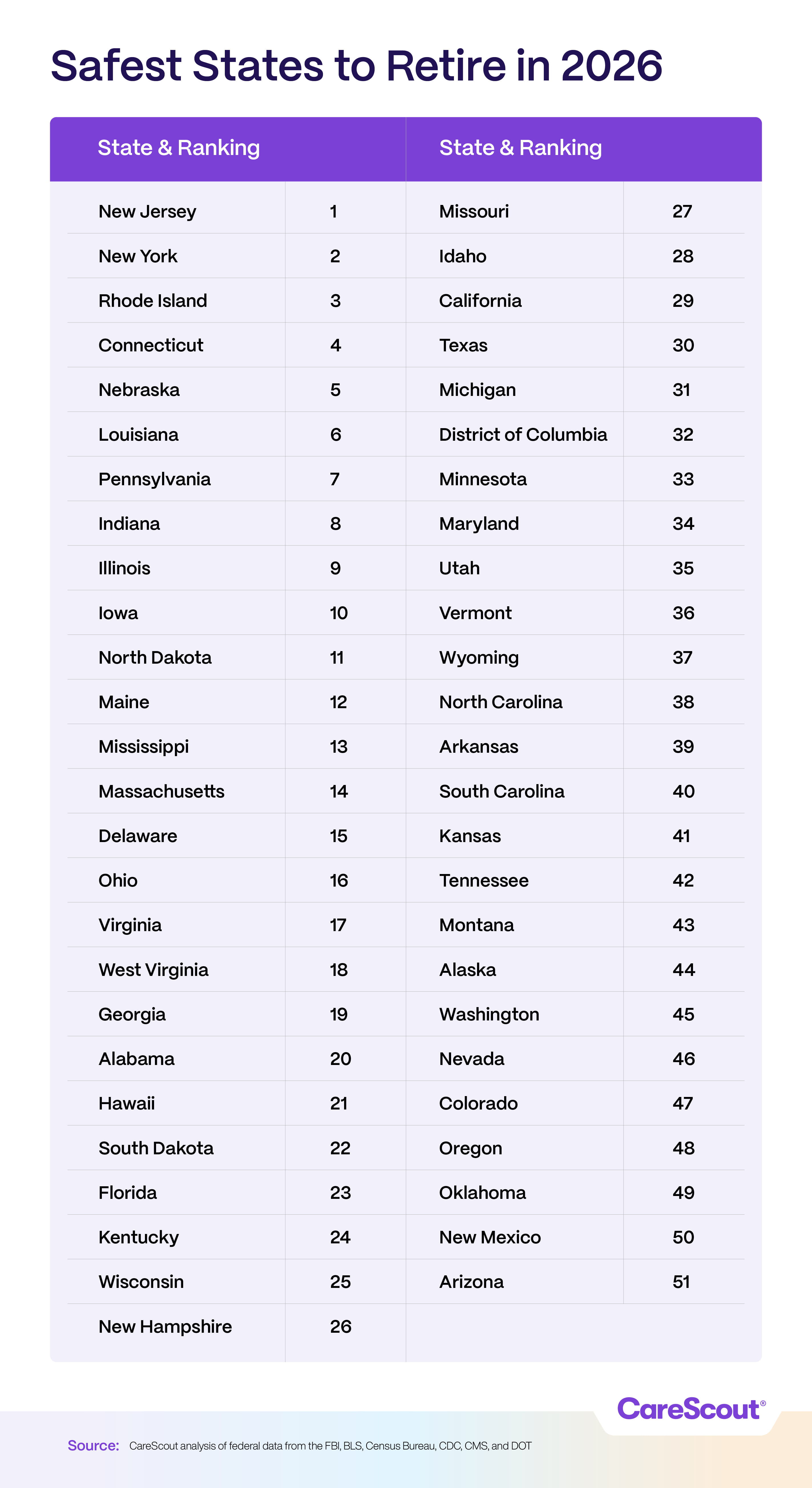
Safest States to Retire
The No. 1 safest state to retire is New Jersey. It saw the second-lowest rate of fall-related deaths among older adults in the country (34.3 per 100k), paired with a strong police presence (937 officers per 100k seniors) and a high ranking for elder fraud (176.9 complainants per 100k, No. 11).
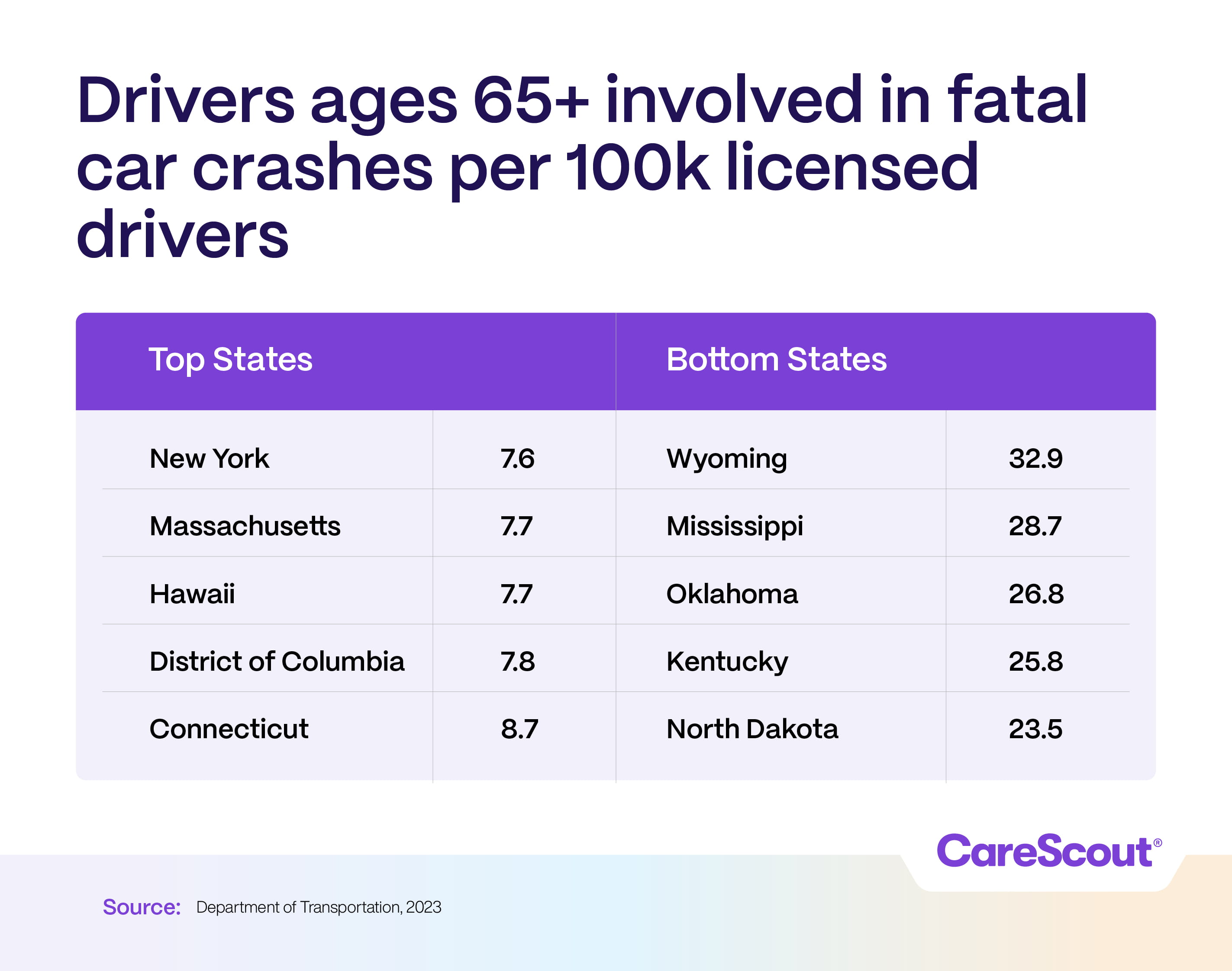
Following close behind are New York, Rhode Island, Connecticut, and Nebraska. These states earned their spots in the top five for different reasons: No. 2 New York had the lowest rate of fatal crashes involving older drivers in the nation (7.6 per 100k licensed drivers), while No. 3 Rhode Island and No. 4 Connecticut had some of the lowest rates of violent crime against seniors (38.1 and 28.4 crimes per 100k seniors, ranking 6th and 2nd, respectively).
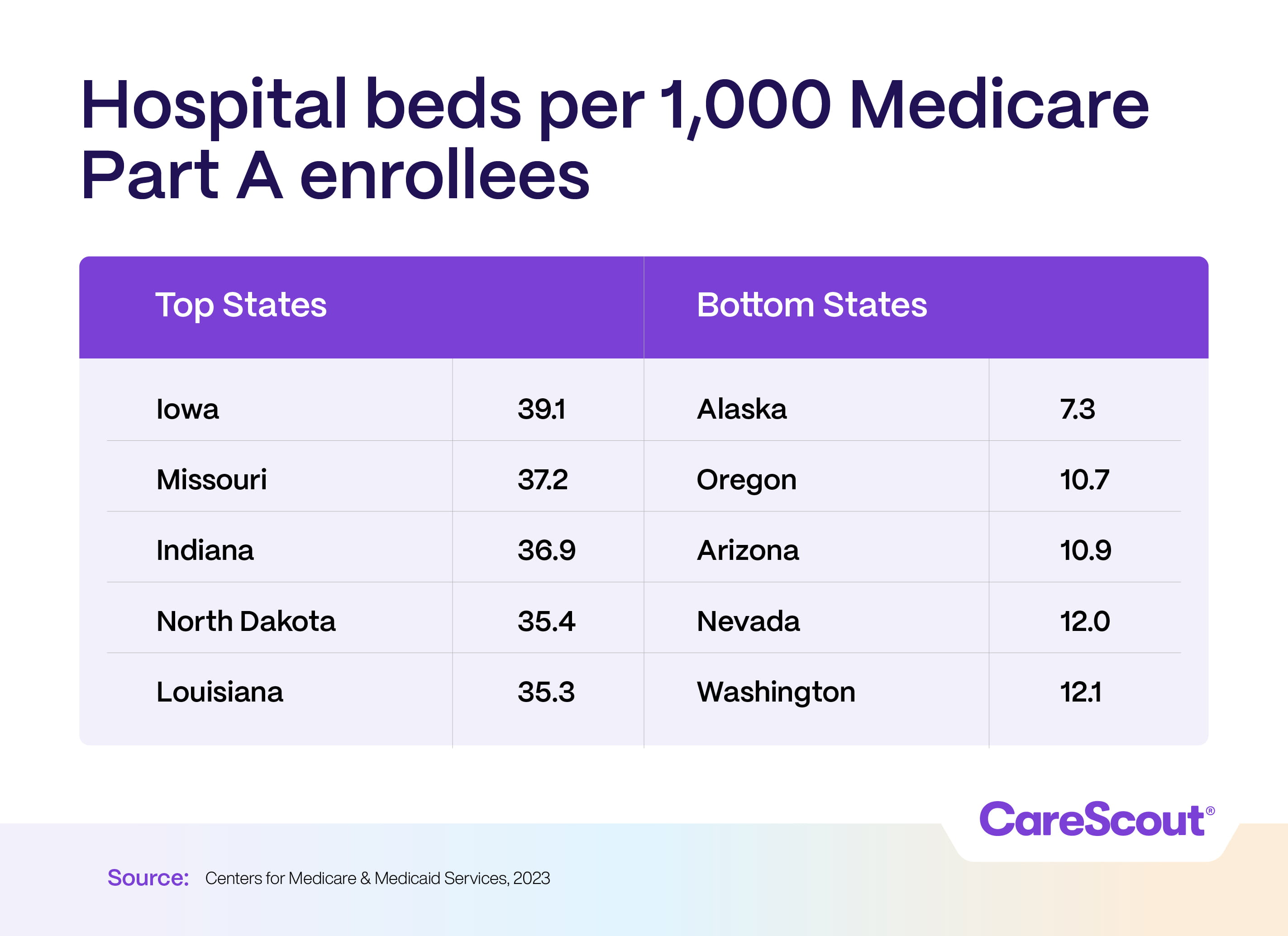
No. 5 Nebraska stood out for its low elder fraud rate (166.7 complainants per 100k, sixth-lowest in the U.S.) and a strong showing for hospital bed availability (35 beds per 1,000 Medicare enrollees, sixth-highest in the country).
Most Dangerous States to Retire
Western states dominate the bottom-ranked states. Arizona ranked as the least safe state overall, driven primarily by the highest rate of elder fraud in the country by a wide margin (501.2 complainants per 100k seniors) and poor hospital bed availability (10.9 beds per 1,000 Medicare enrollees, ranking 49th). Notably, Arizona lands in the middle of the pack on violent crime (79.8 per 100k seniors, ranking 28th).
Rounding out the bottom five are New Mexico, Oklahoma, Oregon and Colorado. Most of these states struggled with high property crime rates against seniors, with No. 49 Oklahoma posting the second-highest rate in the nation (1,092.2 per 100k) and No. 50 New Mexico close behind (1,075.8 per 100k).
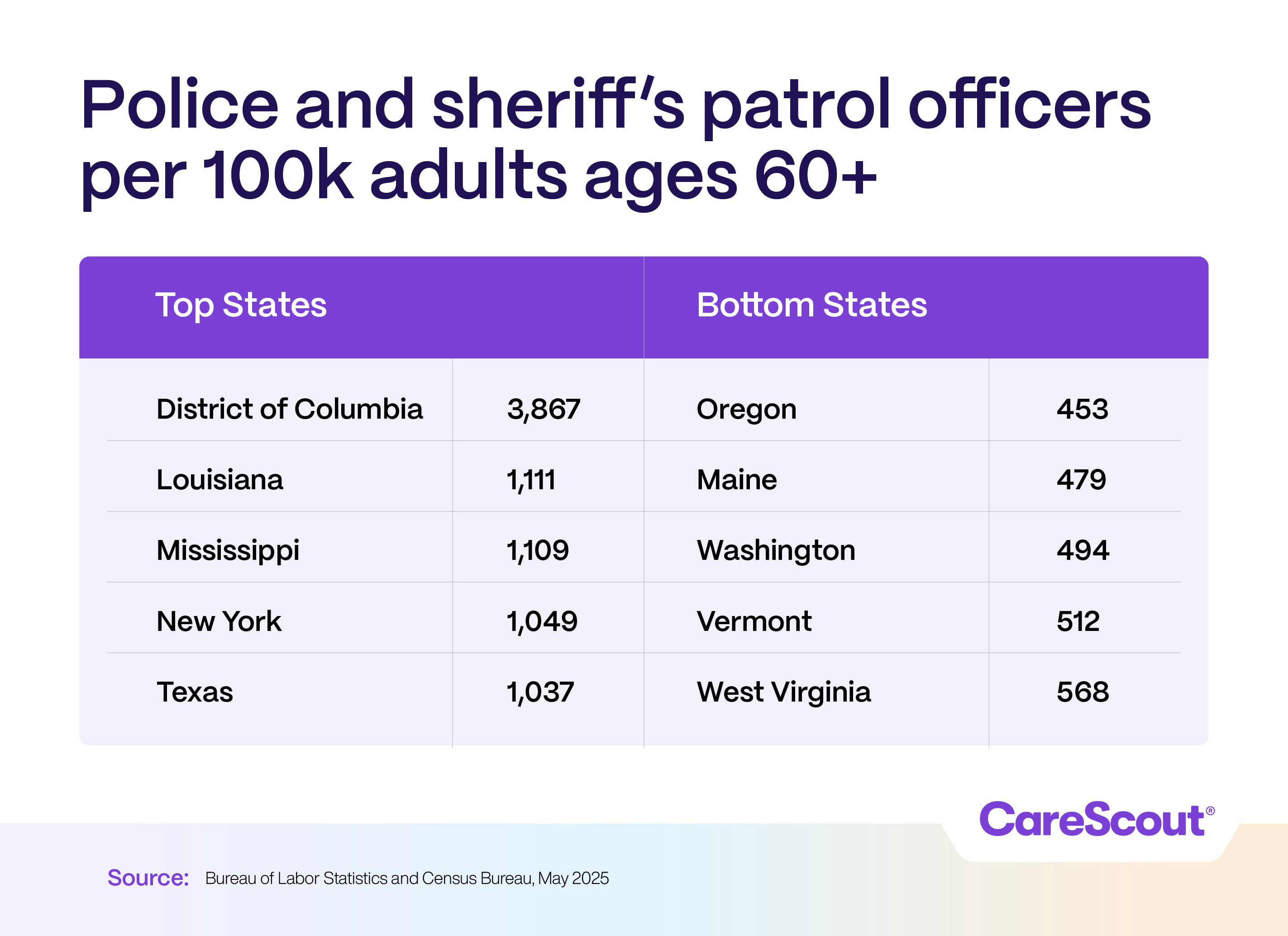
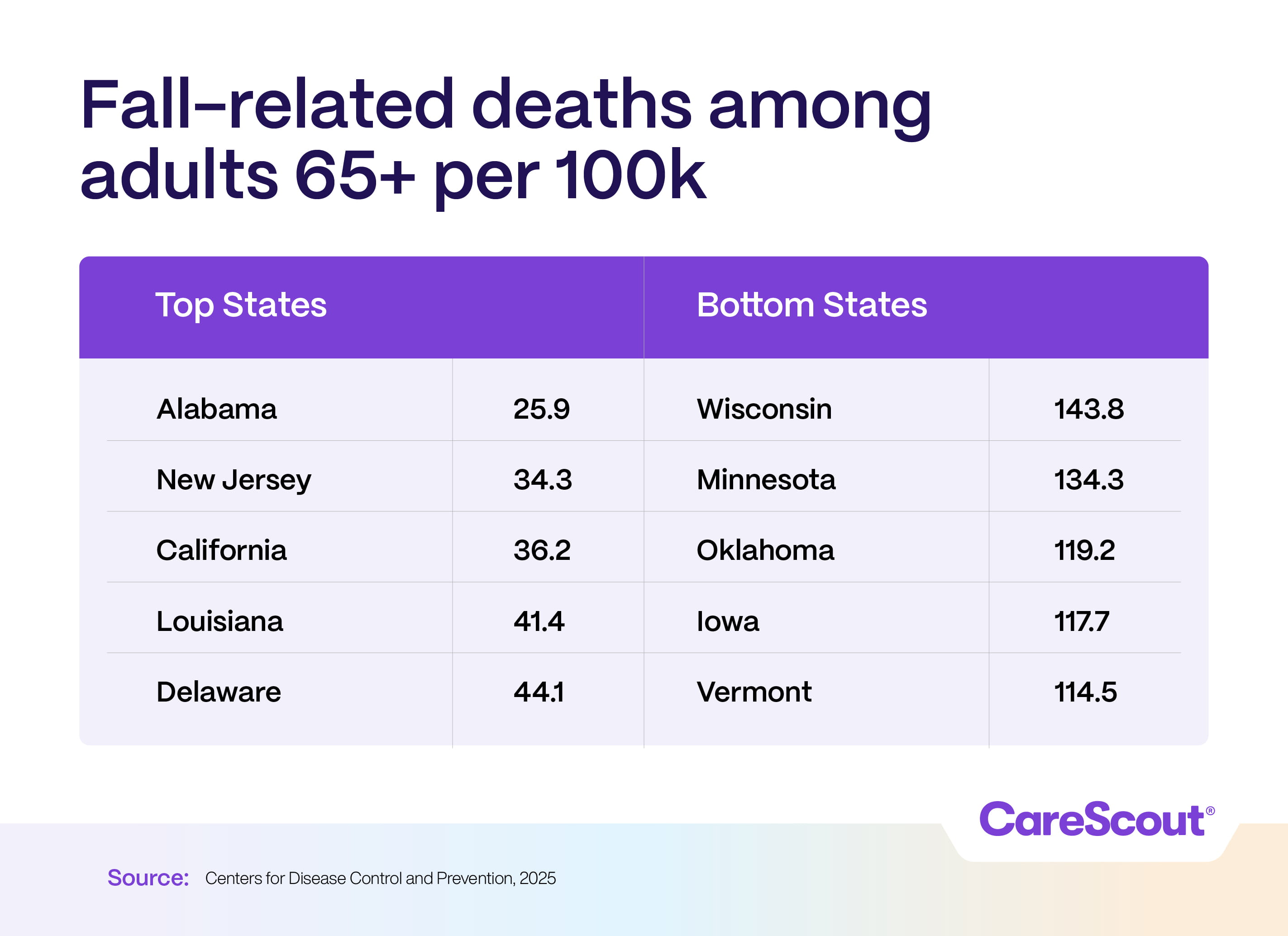
Meanwhile, No. 48 Oregon had the smallest police presence in the country (453 officers per 100k older adults). Seniors in Oregon and No. 47 Colorado were also at higher risk of fall-related deaths, with rates of 101.8 and 95.3 per 100k, respectively.
Top and Bottom States Across the Metrics
Compare how the top- and bottom-ranking states stack up across the seven key metrics we used to determine the safest and most dangerous states to retire in 2026.
Scams: Measures how often older adults report falling victim to fraud.
Property crime: Reflects how often older residents are targeted by property crimes.
Public safety: Indicates how well-staffed local law enforcement is relative to the senior population.
Falls: Tracks fatal falls among seniors, a leading cause of injury-related death.
Road safety: Shows how often older drivers are involved in fatal crashes, with a lower rate indicating safer roads for aging drivers.
Health care: Measures hospital capacity available to Medicare beneficiaries, with a higher rate suggesting better access to care in an emergency.
5 Tips to Plan Ahead for a Safer Retirement
Vet Home Health Aides Before They Enter Your Home: For seniors, it is important to know who is being let into your home. Home health aides and caregivers are in some of the most trusted positions in an older adult's life, which makes it critical to vet them. The home health agencies in CareScout’s Quality Network have been rigorously vetted, which lowers the risk of hiring anyone with bad intentions.
Aging at Home? Fall-Proofing is a Must: Simple changes like grab bars, better lighting and removing tripping hazards can dramatically reduce the risk of a fall-related injury, which remains one of the leading causes of death among older adults. With CareScout’s Care Plan, a nurse comes to your home and offers personalized fall-proof recommendations that highlight common hazards most people overlook.
Never Send Money to Anyone You Have Not Met in Person: Older adults are scammed more than any other age group. Most importantly, never invest or send money to anyone you have not met in person. Having a trusted contact monitor your financial accounts, and talking openly with family about common tactics can go a long way.
Plan for Long-Term Care in Advance: Families who wait until a health emergency to find care often take whoever is available — skipping the vetting, references and quality checks that matter most. Researching long-term care options early means you're choosing a caregiver on your terms rather than settling under pressure.
Know Your Hospital Access Before You Need It: This study found dramatic variation in hospital bed availability by state — a metric that becomes complicated in a fall or medical emergency. When evaluating where to retire, factor in not just proximity to a hospital, but what Medicare coverage and care infrastructure actually look like in that community.
Conclusion
Retirement planning is about more than finances. The communities where people choose to age can influence their financial and physical health, independence and overall quality of life for years to come. While no single ranking can determine the best place to retire, understanding factors like safety, access to health care and community resources can help older adults and their families make more informed decisions. Combined with thoughtful planning and trusted support, these considerations can help people age with greater confidence – wherever they choose to call home.
Methodology
We used the most recent data for seven metrics to determine the safest states for older adults to retire in 2026. We used a Z-score distribution to scale each metric relative to the mean across all 50 states and Washington, D.C., and capped outliers at +/-3. We multiplied Z-scores by -1 when a higher score was negatively associated with being above the national average, for example having more crime, scams, falls or car crashes. A state’s overall ranking was calculated using its average Z-score across the seven metrics. Here’s a closer look at the metrics we used:
Scams: Fraud complainants ages 60+ per 100k older adults, 2025 (Federal Bureau of Investigation and Census Bureau)
Violent crime: Violent crimes (aggravated assault, homicide, rape or robbery) committed against adults ages 60+ per 100k older adults, May 2025-2026 (Federal Bureau of Investigation)
Property crime: Property crimes (arson, burglary, larceny-theft or motor vehicle theft) committed against adults ages 60+ per 100k older adults, May 2025-2026 (Federal Bureau of Investigation)
Public safety: Police and sheriff’s patrol officers per 100k adults ages 60+, May 2025 (Bureau of Labor Statistics and Census Bureau)
Falls: Fall-related deaths among adults 65+ per 100k, 2025 (Centers for Disease Control and Prevention)
Road safety: Drivers ages 65+ involved in fatal car crashes per 100k licensed drivers, 2023 (Department of Transportation)
Health care: Number of hospital beds per 1,000 Medicare Part A enrollees, 2023 (Centers for Medicare & Medicaid Services)
Written by


Christine Healy
Christine Healy is the Head of Brand at CareScout. A growth strategist with over two decades of experience, Christine specializes in scaling mission-driven organizations across aging care, early education, and educational travel. She has previously held executive marketing roles at Bright Horizon...