
Find in-home care
What is in-home care?
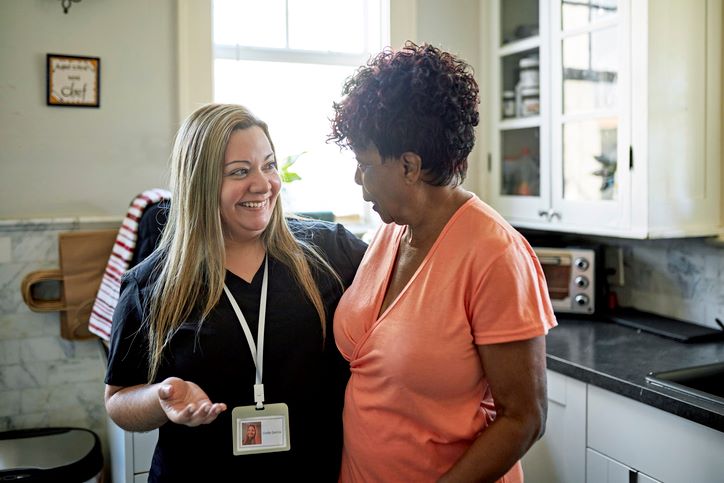
In-home care provides support where an older adult already lives. It can help family members get a little extra support with everyday activities, household tasks, transportation, and even companionship.
Most in-home care is non-medical and can be arranged around a loved one's needs; it can range from a brief visit for a few hours to daily support for a full day. Care is usually delivered one-on-one, and many caregivers will use in-home care as a way to get a much-needed break (also called respite care).
What in-home care often includes:
- Help with bathing, dressing, and grooming
- Meal preparation
- Light housekeeping and laundry
- Transportation and errands
- Mobility and transfer support
- Medication reminders
- Companionship
Browse in-home care by state
Featured in-home care providers
Amada Senior Care - Birmingham
Serving the nearby Birmingham area
- 4 hour shift minimum
CareScout Certified Providers have passed our rigorous quality screening to earn our highest designation. Learn more.

Can help with
Amada Senior Care is Central Alabama’s premier home care agency where reliable, compassionate, and consistent Caregivers anticipate your care needs and customize your experience with our unique senior home care plans, specific to your needs and preferences. We also specialize in Alzheimer's and dementia care. Our team has decades of experience and is proud to support your independence by assisting with daily tasks such as safely ambulating, bathing, dressing, toileting or incontinence, transferring, medication and exercise reminders, meal prep, light housekeeping, and transportation.
Synergy HomeCare of Birmingham
Serving the nearby Birmingham area
- 4 hour shift minimum
CareScout Certified Providers have passed our rigorous quality screening to earn our highest designation. Learn more.
Can help with
We are a trusted in-home care provider, building connections and forward momentum in people’s lives. Our purpose is to provide the best care possible and helping people feel, see and experience more in their lives. We are locally-owned and operated. Our caregivers are direct employees who pass a background check and are trained prior to providing services. We create a customized care plan suitable to most budgets, from an hour to 24/7 care. We’re proud to serve as trusted advisors to families by providing education, outreach, and care resources to the communities we serve.
Entrusted Heart Homecare - AL
Serving the nearby Montgomery area
- 4 hour shift minimum
CareScout Certified Providers have passed our rigorous quality screening to earn our highest designation. Learn more.

Can help with
At Entrusted Heart Home Care, we believe exceptional care begins with compassion, dignity, respect, and trust. Our mission is to enhance the quality of life for individuals and provide families with peace of mind through dependable, personalized, and compassionate care. We understand that choosing someone to care for a loved one is an important decision. That's why we are committed to maintaining high standards of safety, professionalism, and reliability. Our caregivers undergo background checks, are CPR certified and receive ongoing training to help ensure quality care. What sets Entrusted Hearts Home Care apart is our commitment to treating every client like family. We prioritize open communication, consistency, and meaningful relationships built on trust. Our goal is to help every individual feel safe, respected, comfortable, and valued while giving families confidence in the care their loved ones receive. At Entrusted Heart Home Care, your trust is our responsibility, your peace of mind is our priority, and compassionate care is at the heart of everything we do.
Harmony Home and Respite Care - Alabama
Serving the nearby Birmingham area
- 3 hour shift minimum
CareScout Certified Providers have passed our rigorous quality screening to earn our highest designation. Learn more.
Can help with
At Harmony Home & Respite, we believe quality care begins with trust, compassion, and a genuine understanding of each individual and family we serve. Our mission is simple: Care When and Where You Need It. As part of Harmony Care of Mississippi, our team is committed to helping individuals maintain comfort, dignity, independence, and quality of life in the place they call home. We take a personalized approach to care, recognizing that every family has unique needs, preferences, routines, and expectations. Families can expect dependable communication, thoughtful care coordination, and a team committed to professionalism and consistency. Our caregivers are carefully selected and supported to uphold the standards we expect for the families who place their trust in us. What sets Harmony apart is our commitment to creating a coordinated care experience. We work closely with individuals, families, healthcare professionals, and community partners to help ensure care remains responsive as needs change. At Harmony Home & Respite, we don't simply provide care—we strive to become a trusted extension of the families we serve.
Valiant Home Care LLC
Serving the nearby Montgomery area
- 4 hour shift minimum
CareScout Certified Providers have passed our rigorous quality screening to earn our highest designation. Learn more.

Can help with
Valiant Home Care is committed to providing dependable, compassionate, and person-centered care that helps individuals maintain dignity, independence, and quality of life. Since 2020, we have proudly served individuals and families with a strong focus on trust, safety, respect, and consistency. Our experienced team works closely with each family to understand their unique needs and provide a supportive care experience they can feel confident about. We believe quality care begins with listening, building meaningful relationships, and treating every individual with the compassion and respect we would expect for our own loved ones.
Avanta Care - Alabama
Serving the nearby Alpine area
- 1 hour shift minimum
CareScout Certified Providers have passed our rigorous quality screening to earn our highest designation. Learn more.

Can help with
Welcome to Avanta Care Home Care, where compassionate, professional support is delivered with dignity and respect. We provide personalized home care services to individuals of all ages, including seniors, people with disabilities, those recovering from illness or surgery, and families in need of extra assistance. Our dedicated caregivers ensure reliable, high-quality care in the comfort of your home.
When might in-home care be the right choice?
Signs in-home care may be a good fit
- Personal care is becoming more difficult
- Meals or household tasks are being missed
- Driving or transportation is a concern
- More companionship would be helpful
- Family caregivers need additional support
- Help is needed after an illness or hospitalization
What does in-home care cost?
Factors that affect cost
- Location
- Hours of care
- Frequency of visits
- Type of support needed
- Caregiver experience or specialization
- Provider rates
- Minimum visit requirements
Tip: When comparing providers, ask about minimum visit lengths, weekend or holiday rates, cancellation policies, and how pricing may change if more support is needed.
What are families typically paying for?
- Personal care assistance
- Respite for family caregivers
- Meal preparation
- Light housekeeping
- Transportation and errands
- Companionship
- Mobility support
- Medication reminders
Compare senior care options
The right option depends on where someone wants to receive care, what kind of support is needed, and whether those needs are personal, household, social, or medical.
Care types differ on how much support they provide. Getting an understanding of each can help you decide which one is best for your health needs and budget.
Care option
How it differs from home care
Home health care: How it differs from home care
Assisted living: How it differs from home care
Adult day care: How it differs from home care
Memory care: How it differs from home care
Nursing home care: How it differs from home care
Why families use CareScout
Explore quality-focused options
Find home care providers that meet CareScout’s quality standards and are committed to person-centered care.Compare care options in one place
Learn about different types of care, compare options, and prepare questions as you explore providers and communities.Plan for the cost of care
Explore local cost information and better understand the factors that may affect what you pay.Get support along the way
Connect with an advisor who can answer questions and help you navigate your search.
Helpful resources for families

Person-Centered Care: What It Is, and Why You Should Insist on It
Learn more about senior living, aging in place and other care solutions from CareScout today.
5 min read

How to Modify Your Home for Safety
Learn more about senior living, aging in place and other care solutions from CareScout today.
4 min read