
The Montessori method in dementia care


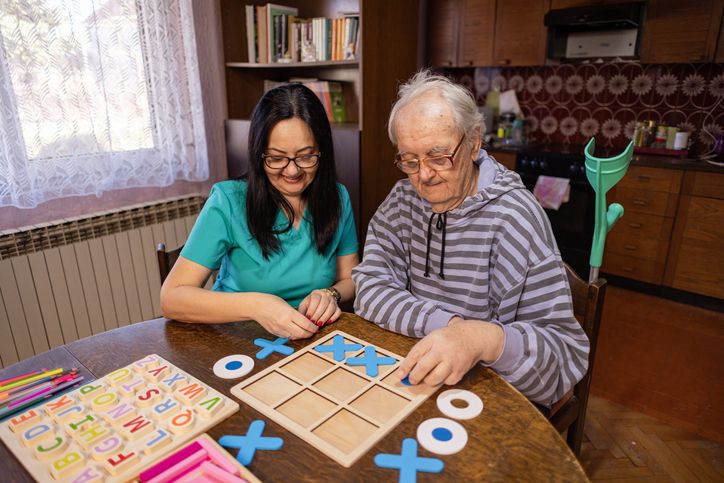
Montessori-based dementia care adapts principles from early education to support independence, dignity, engagement, and meaningful activity.
Common methods include breaking tasks into manageable steps, using familiar roles, providing sensory experiences, and creating clear environmental cues.
Early research suggests possible benefits for engagement, agitation, memory recall, motor skills, eating habits, and positive behavior, although the evidence is still developing.
Bridging the worlds of gerontology and early education may seem unexpected. But as a gerontologist with more than a decade of experience, we are always excited to see where dementia care practitioners find inspiration and how ideas from one field can meaningfully inform another.
Some innovative memory care providers are using Montessori principles from early education to improve care for people living with dementia, with surprisingly positive results. If you’re supporting someone with dementia, this approach may offer encouraging ideas for promoting their independence, dignity, and engagement.
Maria Montessori: A philosophy of care that transcends age
Developed by Dr. Maria Montessori, the Montessori method is a way of understanding and supporting human learning, exploration, and independence. In its traditional form, the approach encourages children to engage directly with their environment through sensory-rich, hands-on experiences. In a typical Montessori program, children immerse themselves in meaningful, self-directed activities that reflect their interests and abilities. They discover what they can do while building self-confidence and independence. Classes usually include children of different ages, encouraging older children to mentor and teach younger ones.
The Montessori approach also encourages teachers to guide each child individually instead of instructing from the front of the classroom. Teachers respect each student’s pace and learning style, fostering mutual trust and respect. This thoughtful interaction between teachers and students creates a nurturing, positive environment that supports learning and development more holistically.
What can dementia care practitioners learn from this respected philosophy? Based on the evidence, quite a lot.
Montessori-based dementia programming: An overview
At its core, the Montessori approach honors each person’s humanity and supports their ability to live more fully, authentically, and independently. This compassionate, individualized philosophy can also apply to the care of older adults with moderate-stage or advanced dementia. Depending on their stage of development or dementia, young children and people living with dementia may face some similar challenges, including difficulty communicating, limited agency, and difficulty regulating emotions. These shared challenges help explain why some Montessori principles can translate to dementia care.
A Montessori-based dementia program translates the principles of Montessori education into a philosophy of dementia care. This person-centered care encourages people living with dementia to engage meaningfully with their environment, which may enhance their quality of life.
A combined analysis of scientific research examining the use of Montessori methods in dementia care found a high degree of confidence that the approach could improve eating behavior, along with some evidence supporting its usefulness in dementia care.
How do Montessori methods for dementia care work?
Some assisted living residences and memory care communities are adding elements of “Montessori life” to their resident programs. Professional caregivers use these approaches to promote independence, lessen agitation, improve mood, and foster social interaction. Although implementation can differ from one community or program to another, common elements include:
Promoting independence: Resident-assisted Montessori programming focuses on creating environments that are easy to navigate and give residents a degree of autonomy. For example, circular hallways that support freedom of movement and oversight are common. As in a Montessori classroom, tools and resources are organized and clearly labeled so each person can function more independently.
Task analysis: In a typical Montessori classroom, teachers help students tackle complex activities by breaking them into smaller, more manageable tasks. In dementia care, a professional caregiver might help a resident get dressed by dividing the activity into sequential steps, such as putting on socks and then shoes. This can help the person feel successful and capable while reducing frustration.
Multisensory stimulation: Following the Montessori principle of sensory-based learning, older adults engage with music, tactile materials, visuals, smells, and other forms of multisensory stimulation. These experiences can engage the person, stimulate their senses, evoke memories, and restore a sense of calm. This brain stimulation may also help build cognitive reserve.
Reality orientation: Professional caregivers provide people living with dementia with clear markers of time and place, reflecting the order and consistency of Montessori environments. These markers might include large, easy-to-read clocks, calendars, and personal belongings that reinforce a sense of reality and routine. If you tour a memory care community, you may see “memory boxes” outside resident rooms. These familiar belongings can help residents recognize their rooms more easily.
Using familiar tasks and roles: Just as Montessori education centers on relevant, real-world activities, professional caregivers may involve people living with dementia in tasks connected to their past roles and experience. These might include folding clothes, setting the table, or gardening, all of which can offer a sense of purpose, routine, and familiarity.
Respect and dignity: Reflecting the Montessori principle of respect for the individual, professional caregivers treat people living with dementia with dignity. They acknowledge each person’s experiences, values, and wishes, even as that person experiences cognitive changes.
The caregiver as observer and guide: Drawing from the Montessori model of the teacher as a guide rather than a lecturer, dementia caregivers act as facilitators. They enable people to do as much as they can for themselves while offering gentle guidance and support when needed. Through careful observation, caregivers can better understand each person’s needs, preferences, and abilities, then adapt the environment and their approach accordingly.
Encouraging social interaction: As in mixed-age Montessori classrooms, professional caregivers create opportunities for people living with dementia to connect socially. This might involve group activities, shared meals, or arranging the environment to promote interaction and nurture a sense of belonging. Some Montessori-based dementia programs also use an intergenerational model. Evidence suggests that social interaction is important and supports healthy brain aging.
Outcomes for people with dementia using the Montessori method
The use of Montessori methods for people living with dementia is an emerging area of study, so the evidence is still developing. Several studies have been completed, but they vary in sample size and confidence level. Some took place in adult day health centers, while others were conducted in long-term care communities. Although the findings aren’t definitive and come from different care settings, these early results appear promising:
Memory recall: A limited study published in the Journal of Gerontological Nursing found that people with dementia who participated in Montessori-style activities showed improved engagement and participation. They also demonstrated better memory recall.
Reduction in agitation: Montessori programs have also been found to help reduce agitation, a common symptom experienced by people living with dementia. This finding appeared in a study published in the International Journal of Geriatric Psychiatry.
Improved motor skills: Montessori activities involving motor skills, such as sorting or folding, have been found to help people living with dementia maintain or improve these abilities, according to an article from the Alzheimer’s Association.
Increase in positive behavior: Research published in International Psychogeriatrics found that Montessori-based activities led to increased positive behaviors, such as engagement and interest, and decreased negative behaviors, such as aggression and agitation.
Improved eating habits: There is evidence suggesting that Montessori-based interventions can positively affect eating behavior among people living with dementia. A study in the Journal of Advanced Nursing found that Montessori methods, including basic food preparation and setting the table, may increase self-feeding, improve dietary intake, and prolong independence with eating. These methods also encouraged a sense of purpose and enjoyment while improving the overall dining experience.
Intergenerational Montessori-based activities
Mixed-age groups are a hallmark of early Montessori education, and some practitioners apply the same concept to dementia care. Montessori-based intergenerational programming brings children or younger adults together with people living with dementia, creating positive interactions that can enrich both groups. Activities may include shared arts and crafts, storytelling, gardening, or free play, giving participants different ways to interact and engage. And studies have found that this kind of programming can produce positive outcomes for people living with dementia.
Montessori training and certification for staff and communities
To use Montessori programming in dementia care, memory care communities need to complete a certification process. As with Montessori teachers, the process begins with staff education provided by professionals who understand both the Montessori method and dementia care. This preparation gives staff members a foundation for adapting the approach to residents’ needs.
Training covers the Montessori method’s key principles, strategies, and techniques, along with ways to adapt them to dementia care. After training, staff members put what they’ve learned into practice under the supervision and guidance of trainers.
An evaluation or assessment phase helps ensure that staff members have properly integrated Montessori principles into dementia care programs and that the approach positively affects residents’ quality of life. Once a community consistently demonstrates that it has implemented the program according to the certification body’s standards, it becomes certified as a Montessori-based memory care provider.
The goal is to ensure that care reflects the Montessori approach’s core principles: person-centered, empowering, and respectful care for residents with dementia. If you’re considering a Montessori program for someone you support, ask the community about its certification and how staff members put the approach into practice.
Montessori programs for people with dementia: A final word
The Montessori method offers an innovative, compassionate philosophy of care that promotes dignity, self-esteem, and mental well-being for people living with dementia. Although originally developed for early education, the approach has proved versatile and effective when adapted to this different stage of life.
Empowerment is at the heart of the Montessori method. In both early education and dementia care, the approach fosters autonomy, promotes active engagement, and builds on individual strengths. It shows that, regardless of age or cognitive ability, everyone has the capacity to learn, grow, and retain their individuality.
Supporting someone with dementia can be challenging, but this practical and optimistic approach gives caregivers a way to make a meaningful difference. It’s a powerful reminder that every stage of life holds potential for growth and discovery. With compassion, respect, and appropriate methods, you can help a person living with dementia retain a sense of purpose, dignity, and connection.
Search for memory care providers
Finding the right care starts with understanding your options. Use our Care Finder to search for providers, including those in the CareScout Quality Network.
Expert reviewed by


Nipun Chopra, PhD
Nipun Chopra reviews medical and aging content. With a PhD in Medical Neuroscience from Indiana University School of Medicine, Dr. Chopra's research was centered on the role of key proteins in the progression of Alzheimer's disease.
Written by

Marlena del Hierro
Marlena del Hierro is a strategic senior care industry leader with over a decade of experience. As Director of Operational Growth at CareScout, she drives growth and forges strategic partnerships, leveraging her MA in Gerontology from San Francisco State University. Pr...